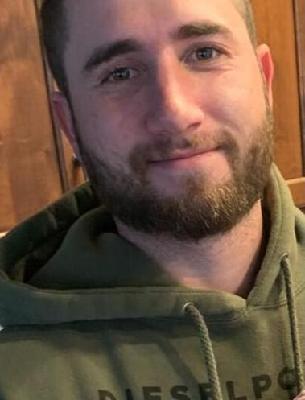
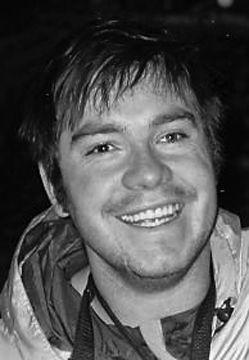
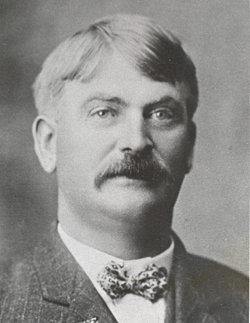
Broderick Clayton “Brody” Hills was a 20-year-old white male from Wyoming whose life, though brief, left a deep and tender imprint on the people around him. Born on October 24, 2001, in Peoria, Arizona, to Christopher and Carlie Hills, he grew up surrounded by family who describe him as hardworking, detail-oriented, kind, loving, and compassionate.
Obituary and memorial accounts remember him first not for the way he died, but for the way he moved through the world: as a devoted son, brother, grandson, nephew, cousin, and friend whose presence made people feel seen and cared for.
As a child, Brody was known for a fearless imagination. Stories from his family recall him racing around neighborhoods in superhero costumes, turning ordinary streets into adventures. In Lacey, Washington, neighbors became so accustomed to the little boy running past with a tree branch stuck in his waistband as a “sword” that they eventually bought him a real toy sword and sheath. Even in play, he balanced boldness with a striking sensitivity: when he once saw his mother crying, he quietly drew a picture of himself crying too, a wordless way of saying he felt her pain and stood with her. That drawing, family members have shared, still hangs in her bathroom as a reminder of his deep empathy.
As he grew older, Brody's curiosity and drive pushed him into a wide range of interests. He taught himself chess and magic card tricks, joined a chess club in Columbus, Georgia, and poured himself into academics, always chasing the better version of himself. On the field he became a gifted athlete, especially in soccer, playing competitively in Georgia and North Carolina and forming friendships that stayed with him even after he moved away. Later, in Jackson, Wyoming, he thrived at Jackson Hole High School. He excelled in class, but also sought out new challenges: he joined track and helped set a state record on a relay team, kicked for the football team, raced alpine skis his senior year, and, through the school's Mountaineering Club, learned to love the Tetons' rugged peaks, snowfields, and backcountry routes.
After high school, Brody enrolled at the University of Wyoming and spent roughly two years in college, including a study-abroad semester in Barcelona. Friends and family recall that in these years he embraced independence, surprising them with photos from summited mountain peaks, technical ski descents, or even a trip that landed him unexpectedly in a hospital in Morocco with food poisoning. He worked a series of jobs—landscaping, lifeguarding, shuttling rafting boats, interning at an accounting firm—and was known at home for stepping in to take over heavy chores so his mother wouldn't have to shoulder them alone. Online memorials note that even amid school, work, and outdoor adventures, what people remembered most was his manner: the way he consistently treated classmates, coworkers, and strangers with courtesy and genuine kindness, and how often he reached out when someone seemed to need support.
Behind that outward competence and generosity, however, Brody was also wrestling with mental health challenges. A nonprofit founded in his name later described how he “tragically lost his battle with mental health,” language his family and supporters use to frame his death as the culmination of a private struggle rather than a random act of violence. On March 28, 2022, while attending the University of Wyoming, he died in Laramie. A regional news article about suicide in Wyoming reported that on that date a 20-year-old Teton County resident enrolled at the university died by suicide with a handgun, one of two such firearm suicides among young adults in the county that year; memorial sites for Brody link directly to that coverage and state that he was lost to gun violence in Laramie on that same day, aligning the public reporting with his case.
The immediate response to his death was one of profound grief but also of community. Funeral services were held in Jackson, Wyoming, on April 6, 2022, at a local Latter-day Saint church building, with visitation beforehand and a livestream arranged so those far away could participate. His obituary invited mourners not only to attend but to honor him in ways that reflected his passions: instead of flowers, the family asked for donations to the Jackson Hole High School Mountaineering Club, helping other young people discover the mountains he loved so much. A separate online fundraiser, organized in his memory, echoed that theme of honoring Brody through support for outdoor and educational opportunities tied to his interests.
Out of that loss, his family and friends built a lasting tribute in the form of Wide Open: The Brody Hills Foundation. Based in Wyoming, the nonprofit focuses on teens and young adults, using dirt bikes and outdoor adventure as tools to build resilience, community, and mental health support. The foundation's own description of its origins makes clear that it was created both to honor Brody's love of riding and the outdoors and to confront the mental health struggles that contributed to his death, so others might find help before reaching a similar crisis point.
Public accounts of Brody's death consistently situate it within the broader crisis of suicide and underfunded mental health care in Wyoming, a state whose suicide rate ranks among the highest in the United States and where a large share of those deaths involve firearms. The regional reporting that references the March 28 incident does so in the context of statistics and prevention, not criminality, and there is no indication in the public record that law enforcement treated his death as a homicide. There are no reports of suspects, arrests, criminal charges, trials, or convictions connected with the case. Instead, his story has become part of a larger conversation about how communities respond to mental health struggles in young people—remembering a bright, driven, and deeply compassionate student whose life ended in Laramie, and whose name now anchors efforts to ensure others have the support he did not fully receive in time.