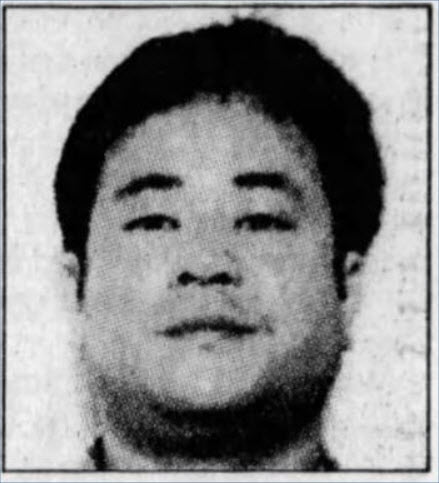
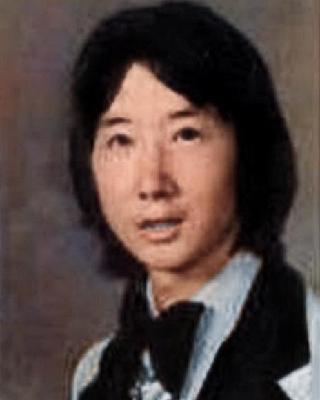
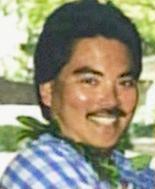
Ford Kazuhiko Kanehira, a 41-year-old Native Hawaiian man, was one of the seven men killed in the November 2, 1999 massacre inside Xerox's building on Nimitz Highway in Honolulu, a morning that shattered families and stunned Hawaiʻi. Kanehira had spent 19 years with Xerox, and the picture that emerged afterward was not of a public figure or a man who chased attention, but of someone remembered for warmth, loyalty, and a playful, boyish spirit.
His wife, Lorna, said he was usually the one behind the camera rather than in front of it, and relatives and friends described him as cheerful, childlike, innocent, and deeply devoted to his family. He left behind his wife and young son, Brice, and when he was memorialized nearly two weeks later, hundreds of mourners packed Central Union Church to remember a husband, father, cousin, classmate, and co-worker whose life had been cut off without warning.
The killing unfolded as part of what became known as the Xerox shootings, the deadliest mass workplace shooting in Hawaiʻi history at the time. Prosecutors and later trial accounts said Byran Koji Uyesugi, a Xerox copier repairman and Kanehira's co-worker, arrived at the building appearing calm, went upstairs, and began shooting. Two men were killed first in a computer room; then Uyesugi moved into a second-floor conference room where five employees had gathered for an 8 a.m. meeting. Ford Kanehira was among those slain there, alongside Melvin Lee, John Sakamoto, Ron Kataoka, and Peter Mark. Another employee, Steven Matsuda, narrowly escaped after Uyesugi fired at him in a stairwell. The violence was over in minutes, but the horror lingered in the building, in the hallways, and in the lives of the families who would spend the following days identifying bodies, planning funerals, and trying to understand how an ordinary workday had turned into a scene of mass murder.
There was, however, no mystery in the sense of an unknown assailant. Police quickly identified Uyesugi as the suspect on the day of the killings. According to contemporaneous reporting, he fled the Xerox building in a company van after the shootings and was found by midmorning near the Hawaiʻi Nature Center in Makiki. The day then shifted from massacre to manhunt and standoff. Surrounded by police, Uyesugi remained in the van for hours before surrendering at about 3 p.m. That same early coverage also reported that he was the registered owner of 17 guns, including the 9mm handgun believed to have been used, and that he had previously been arrested in 1994 for criminal property damage at work after an argument with co-workers. Those details fed a public sense that warning signs had existed long before the bloodshed of November 1999.
The case moved quickly into the courts. On November 9, 1999, an Oʻahu grand jury indicted Uyesugi for first-degree murder in the deaths of the seven coworkers, along with seven counts of second-degree murder and one count of attempted second-degree murder. Days later, a judge revoked his bail and ordered him held without bail, ruling that he posed both a flight risk and a danger to the community. As the case advanced, the defense tried to build an insanity case, arguing that Uyesugi suffered from delusions and longstanding mental problems, while prosecutors argued that whatever disorder he may have had, he still knew what he was doing and carried out the attack intentionally and knowingly.
That legal fight ended in June 2000 when a Circuit Court jury found Uyesugi guilty on all counts that mattered most: first-degree murder for the seven deaths and attempted second-degree murder for firing at the surviving employee. The jury's verdict came swiftly, and it rejected the insanity defense. On August 8, 2000, Judge Marie Milks sentenced Uyesugi to life without the possibility of parole, the harshest sentence available under Hawaiʻi law. In court, the families of the dead spoke about what had been taken from them, and Kanehira's widow said that friends had seen them as the perfect couple and that she did not know how to be herself without him. So the story of Ford Kazuhiko Kanehira ends not with an unsolved question, but with a conviction: the suspect was arrested the same day after the standoff, formally indicted, tried, found guilty, and sentenced to spend the rest of his life in prison. What remained unresolved was the deeper wound left behind for the people who loved Ford, who had to go on after losing a man remembered less for how he died than for how brightly and gently he had lived.