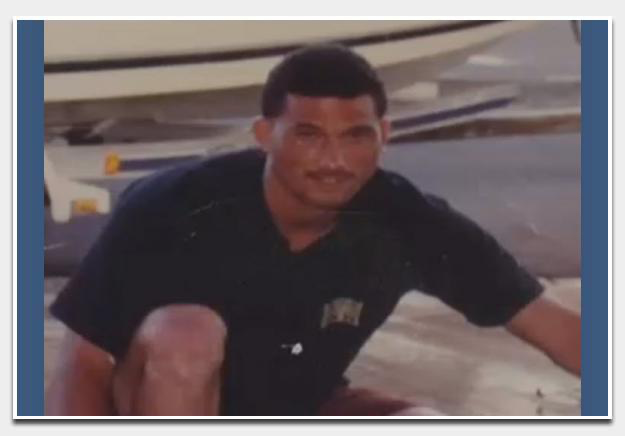
Do you know who murdered Efnet Haro? Efnet Alfred Haro, a 45-year-old Asian / Pacific Islander man, left a relative's apartment at Honolulu's Kuhio Park Terrace housing complex in the early morning darkness of November 10, 1999, apparently intending to walk between buildings to visit another family member. At some point along that short, familiar route near the Kuhio Park Terrace Family Center, his path crossed with someone who turned the ordinary walk into a fatal encounter.
When he was discovered lying in a nearby parking area, his injuries made it immediately clear that something brutal had happened to him. 
Haro was found unconscious in the parking lot near Building A of Kuhio Park Terrace at about 2:30 a.m., his head so badly injured that first responders rushed him to Queen's Hospital in critical condition. Twelve hours after he arrived, despite medical efforts, he died from those wounds. Police quickly opened a murder investigation, treating the scene around the low-rise public housing complex as the starting point of a homicide case rather than an accident or medical emergency. News accounts at the time described the quiet residential lot suddenly lit by emergency vehicles and crime-scene lights, an otherwise routine weekday morning transformed by violence. 
In the hours before the attack, Haro had been spending time with relatives who lived in the Kuhio Park Terrace complex. Investigators later pieced together that he may have been walking between the buildings, moving from one family member's residence toward another, when he was assaulted. When he was found, some of his belongings were missing, leading detectives to consider robbery as a possible motive rather than a random altercation. The combination of severe head trauma and missing property suggested that whoever confronted him did more than simply threaten him; they beat him with enough force to leave him barely clinging to life on the pavement. 
Within days, Honolulu police publicly appealed for help. They confirmed that Haro had been attacked in the Kuhio Park Terrace parking lot between 2:00 and 2:30 a.m. and released his physical description, asking anyone who might have seen him walking through the complex, or noticed suspicious people or vehicles in the area, to come forward. CrimeStoppers numbers were circulated in local news, and the case was highlighted in “Police, Fire, Courts” briefs that urged witnesses to talk to detectives. Yet no key eyewitness stepped forward with the kind of detail that could break the case open, no description of an argument in the lot, no recollection of a fleeing figure or car that investigators could definitively tie to the killing. 
As months turned into years, Haro's death moved from an active homicide investigation into the realm of cold cases. The Honolulu Police Department later cataloged it on its public cold case list, summarizing the few solid facts detectives could rely on: the early-morning timing, the location near the Kuhio Park Terrace Family Center, the critical head injuries, the missing property. True-crime researchers and cold-case websites would eventually revisit the story, but their accounts largely circle back to the same small cluster of details, underscoring how little is truly known about who attacked him or exactly what happened in those final minutes of his life. 
Despite the initial urgency of the investigation and repeated public appeals, there is no record of any suspect being publicly identified, arrested, or charged in connection with Haro's killing. The case remains officially unsolved, preserved today as a brief but haunting entry among Honolulu's cold-case homicides. All that is firmly established is that a routine walk through a housing complex in the middle of the night ended in a deadly assault, and the person or people responsible have never been brought to justice.