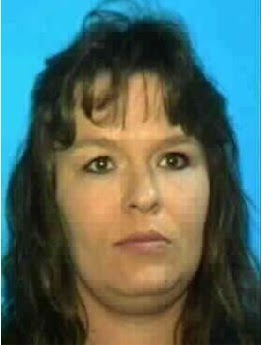
Shawny Lee Hatch Smith was a 32-year-old white woman from Cheyenne, Wyoming, whose life was cut short on a frozen stretch of the Colorado–Wyoming border in early February 2003. In the days before her death she was juggling work and motherhood, raising a young son and daughter while trying, as her sister would later say, to “live the American dream.” On the morning of February 8, 2003, a property owner walking his land just off U.S. Route 85 in rural Weld County, Colorado, barely a quarter mile south of the Wyoming state line, found her body lying in a field. Investigators determined that she had been badly beaten and sexually assaulted, and quickly classified the case as a homicide that likely occurred late on the night of February 6 or in the very early hours of February 7.
Long before her name was tied to a cold case file, Shawny’s story was rooted in the Rocky Mountain West and the Arkansas River Valley. She was born in Laramie, Wyoming, and attended school there until 1986, when her family moved to Clarksville, Arkansas, and she continued her education in Clarksville and nearby Lamar. In October 2000 she returned to Wyoming, settling in Cheyenne and taking a job with an industrial company while rebuilding her life in the place where she had begun it. Her obituary later described a close-knit family: a devoted mother survived by her two young children, a sister, and extended relatives scattered between Wyoming and Arkansas, all of them suddenly forced to grieve someone whose death they barely understood.
In the last week of her life, Shawny’s world looked, from the outside, fairly ordinary. She shared a home with her sister in Cheyenne; the two women were “roommates,” as her sister later recalled, each moving in slightly different social circles. On February 5, Shawny phoned to say she was having trouble with her car and planned to go out; it was the last conversation they would have. Two nights later, late on February 6 or in the very early hours of February 7, witnesses saw Shawny at the Cowboy South Bar on South Greeley Highway in Cheyenne, a popular local spot that now houses the Outlaw Saloon. Sometime after she left that bar, she vanished. When her body was discovered the next morning over the state line in Colorado, investigators concluded from the autopsy and crime scene that she had been beaten and raped before being left in the open winter field.
From the beginning, the investigation straddled two jurisdictions. The Laramie County Sheriff’s Office in Wyoming and authorities in Weld County, Colorado, worked with the Wyoming Division of Criminal Investigation to piece together how a Cheyenne night out ended in a Colorado farm field. In 2017, DCI formally took the lead on the case, folding it into a growing list of homicides handled by its cold case unit. Years after the murder, a detailed review of physical evidence highlighted a particularly promising clue: tire impressions left in the soil near where Shawny’s body was found. Analysts concluded the vehicle likely carried Sport King A/T Steel Radial all-terrain tires, a now-discontinued model considered relatively rare. The tread pattern was consistent enough that, in 2025, DCI publicly appealed for help locating any surviving examples of those tires, hoping that matching a specific tire to the tracks in the field might narrow the pool of possible vehicles and, eventually, the person who drove one of them into that pasture on the night Shawny died.
Over the years, detectives have revisited the case, re-examined evidence, and renewed appeals to the public. Press releases and news stories marking the twentieth anniversary of the discovery of Shawny’s body emphasized both the brutality of the crime and the human cost: two children who grew up without their mother, a family that waited for answers, and a mother who passed away without ever knowing what happened to her daughter. Despite these efforts, authorities have never announced any arrests or publicly named a suspect, and the homicide remains officially unsolved, listed among Wyoming and Colorado cold cases more than two decades later. For Shawny’s sister, who still speaks of her as a fun-loving woman with many friends and an ordinary dream of raising her children, the hope is that someone—perhaps a former acquaintance, a long-silent witness, or an owner of those rare tires—will finally come forward so that the story of a life that ended in a windswept border field can at last be given an ending that includes justice.