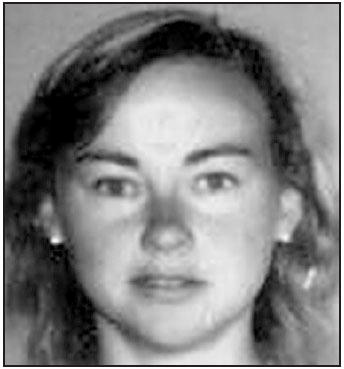
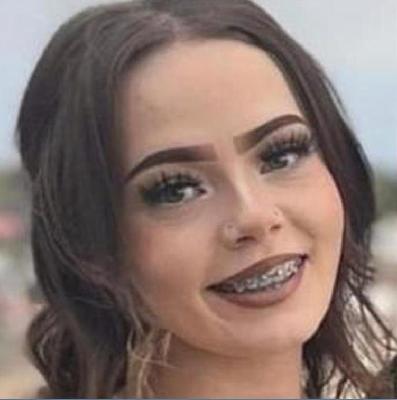
In the summer of 1976, Kellie Marie Wyckhuyse was a 15-year-old high school student living in rural Uinta County, Wyoming. Her life was cut tragically and brutally short on June 27 of that year, not for any transgression of her own, but for simply doing what she thought was right. Her death was an act of senseless retaliation, a violent response to her honesty after she reported a minor drug crime to the police.
This act of civic duty ultimately cost the young woman her life and pulled back the curtain on a dark and complex web of crime in the small Wyoming community.
The series of events leading to Kellie’s murder began when she provided a statement to authorities about a man named Jamey Hysell, which led to his arrest for marijuana possession. Enraged, Hysell plotted a disproportionate and horrific revenge. He enlisted an acquaintance, Michael "Mike" Jack Hickey, to murder the teenage girl. On that fateful June evening, Hickey picked Kellie up and drove her to an isolated, rural spot under the pretense of meeting Hysell. There, Hickey revealed their deadly plan. When Hysell failed to appear at the location, Hickey proceeded on his own, striking Kellie on the head with a rock and killing her.
For a time, Kellie’s disappearance was a mystery. The case broke, however, when the man who ordered her death became the one to reveal it. While being questioned by police on unrelated larceny charges, Jamey Hysell used his knowledge of the murder as leverage. He told investigators what had happened to Kellie and, because Hickey had previously shown him the location, was able to lead authorities directly to her gravesite. Hysell implicated Hickey in the killing, and police tracked Hickey to California, where he initially denied any involvement before agreeing to return to Wyoming.
The path to justice was not straightforward. After Hickey was charged with the murder, a far more sinister local figure, Mark Hopkinson, intervened. To protect Hickey, Hopkinson orchestrated a plan for Hickey, himself, and another man, Jeff Green, to provide false stories that would frame Jamey Hysell for the murder. The plot worked, and the murder charges against Hickey were dropped, with Hysell being indicted instead. Hickey was, however, sent to prison on burglary charges in the spring of 1978. The truth remained buried under a layer of lies and intimidation.
The case took a dramatic turn in July 1978, during Hysell's trial for Kellie's murder. Jeff Green, one of the men involved in the cover-up, had a crisis of conscience. Fearing that Hysell might be wrongly sentenced to death, Green broke down and confessed the truth. He admitted that his statements incriminating Hysell were lies and that Michael Jack Hickey was the person who had actually killed Kellie. Green's testimony led to the immediate dismissal of all charges against Hysell.
Finally, in May 1979, the full story came to light. When called to testify before a grand jury, Michael Jack Hickey confessed to killing Kellie Marie Wyckhuyse. His confession was part of a larger plea agreement. At the time, Hickey was also deeply entangled in the violent criminal activities of Mark Hopkinson, including a bombing that killed three members of the Vehar family. In exchange for testifying against Hopkinson in the Vehar case, Hickey was allowed to plead guilty to the second-degree murder of Kellie.
Michael Jack Hickey, a serial killer involved in at least four murders, was sentenced to 20 years in prison for ending a 15-year-old girl's life. He was released from prison in 1999 and returned to his family's home in Bridger Valley. The murder of Kellie Wyckhuyse, a brutal retaliation for a teenager’s honesty, became a pivotal event that ultimately helped unravel a string of heinous crimes that had plagued the state of Wyoming.