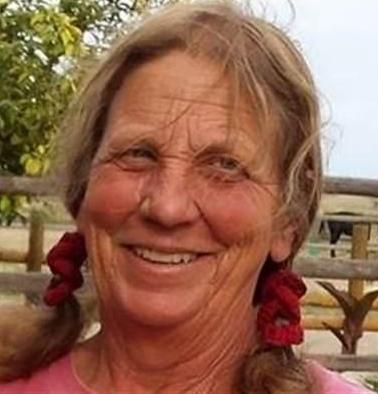
On the morning of August 26, 2017, in Powell, Wyoming, 65‑year‑old Shirley Williamson, a white female, peaceful and defenseless, met a tragic end.
Shirley, who had been blind for some time and was enduring severe mental health struggles,marked by paranoia and the torment of hearing voices, faced a worsening emotional and physical decline.
Her devoted husband of 36 years, David Williamson, carried the daily burden of her care, even as her condition steadily
deteriorated.
They were bound together by love and routine, but as her inner turmoil deepened, so too did the isolation surrounding them.
According to testimony, Shirley had begun speaking of death, telling her son, “If I die, it will be someone else who did it,” casting a haunting shadow over the household.
That morning, Shirley's paranoia and fear reached a breaking point.
She took an unloaded gun, one her husband had provided for protection, aimed it at him, and fired—the weapon clicking painfully with no bullet discharged.
David responded with empathy, immediately calming Shirley, who then pleaded with him to shoot her.
She asked gently for “one last kiss,” lay across the bed, closed her eyes, and for a moment, seemed serene.
But then, gunfire echoed through their rural home. In that heartbreaking instant, 65‑year‑old Shirley, the white female beloved for her kindness, was fatally shot.
In the aftermath, David Williamson, aged 65 at the time and himself shaken by grief, called 911 and admitted, “I'm the one that killed her. That's all you need to know.”
When deputies arrived, they found him waiting on the porch. He led them inside to the bedroom where Shirley lay.
In that moment, shock rippled through the community as the peaceful caregiver revealed his role in her death.
Authorities swiftly moved to charge him.
The Park County Attorney's Office initially charged David Williamson with second‑degree murder, accusing him of killing Shirley purposely and maliciously, yet without premeditation.
During deliberations in court that followed, he entered a plea of not guilty. David maintained that Shirley had attempted to take his life first and that she had asked him to end her suffering.
But as the legal process unfolded, his description of their life together, and the profound pressures of caring for a spouse ravaged by mental illness, began to shape a different narrative. Shirley, the 65‑year‑old white female, had been tethered to reality by her husband's devotion even as she slipped into a fractured world of hallucinations and fear.
Her plea for release from her torment ultimately became the catalyst for tragedy, and David's role shifted in perception from accused spouse to bereaved caretaker.
Months later, in May 2018, David Williamson changed his plea to one of guilty for voluntary manslaughter.
In part, this was an acknowledgment of the intense emotional and mental anguish at play when Shirley, the 65‑year‑old woman he had loved and cared for, was killed, not out of malice, but in a moment steeped in suffering and confusion.
The judge, presiding over the case in Park County District Court, sentenced him to the maximum term of 18 to 20 years in prison.
And so the story of Shirley Williamson, a blind, mentally ill, 65-year-old white female in Powell, Wyoming, ends in sorrow—a life broken by illness, consumed by fear, and extinguished by the hand of the man who loved her most.
David, her husband and lifelong caregiver, remains convicted, serving a prison sentence meant to carry the weight of their shared pain and the final, fatal act of mercy—or despair—that ended her suffering.