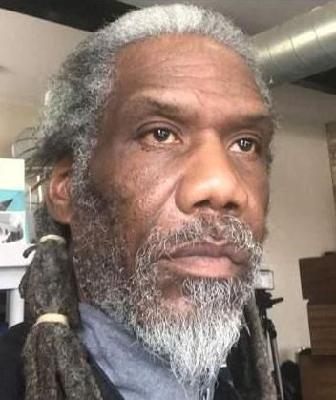
Alac Jackson, a 49-year-old African-American man, lost his life during a shooting in Milwaukee, Wisconsin, on June 28, 2016. What began as an evening of drinking with people he knew ended in tragedy when a handgun discharged inside an apartment near North 28th Street and West Capitol Drive. Jackson suffered a fatal gunshot wound to the head, and the circumstances surrounding his death led investigators to pursue criminal charges against a longtime friend, Oliver D.
Kennedy.
At approximately 2:15 a.m., Milwaukee police officers responded to a 911 call reporting a shooting at the apartment building. When they arrived, they encountered Kennedy outside, visibly distraught and crying. He directed officers upstairs to his apartment, where they discovered Jackson slumped in a chair with a gunshot wound to his head. A 9mm semiautomatic handgun was lying on the floor nearby. Police officers and Milwaukee Fire Department personnel attempted lifesaving measures, but Jackson could not be revived and was pronounced dead at the scene. An autopsy later determined that he had died from a gunshot wound to the right side of his head. The medical examiner classified the death as a homicide and identified the injury as a contact wound, meaning the muzzle of the firearm had been pressed against Jackson's skin when the shot was fired.
Investigators began interviewing those who had been with Jackson and Kennedy before the shooting. One of those individuals was Curtis Long, who told detectives that he had known both men for approximately 15 years and considered them very good friends. Long described a history of the two drinking alcohol and handling firearms together. According to the criminal complaint, Kennedy telephoned Long at approximately 2:30 a.m., shortly after the shooting. During the conversation, Kennedy was crying and explained that he and Jackson had been drinking and playing with a gun when he accidentally shot Jackson. He repeatedly insisted that he had not intended to kill his friend.
Another witness, Lamonte Daniels, provided investigators with an account of the moments surrounding the shooting. Daniels reported that he had been drinking with Jackson and Kennedy earlier that night. While inside Kennedy's apartment, Daniels was looking at his phone when he suddenly heard a gunshot. Immediately afterward, Kennedy exclaimed that he had accidentally killed his cousin. Daniels' statement supported Kennedy's assertion that the shooting had occurred unexpectedly, although investigators still needed to establish precisely how the firearm had discharged and who was responsible for handling it.
During questioning, Kennedy described the confrontation that preceded Jackson's death. He acknowledged consuming a substantial quantity of alcohol, estimating that he had drunk approximately a gallon of a vodka-and-cranberry-juice mixture before the shooting. Kennedy told investigators that Jackson had removed a handgun from his waistband and pointed it toward him. Angered by the gesture, Kennedy approached Jackson and warned that if Jackson intended to point the weapon at him, he would take it away and use it himself. According to Kennedy, Jackson subsequently lowered the weapon toward the floor after manipulating its slide. Kennedy then placed both hands on the handgun and attempted to wrestle it away. During the struggle, the weapon discharged, striking Jackson in the head. The handgun subsequently fell to the apartment floor.
Although Kennedy maintained that the shooting was accidental, prosecutors determined that his conduct warranted criminal prosecution. The Milwaukee County District Attorney's Office charged him with homicide by negligent handling of a dangerous weapon. Authorities considered the combination of alcohol consumption, the confrontation over the handgun, and the circumstances under which the firearm discharged when determining criminal responsibility. Kennedy made his initial court appearance on July 3, 2016, when probable cause was found to continue the proceedings. His cash bond was set at $5,000. The original charge carried a potential punishment of up to 10 years in prison and a $25,000 fine.
The criminal proceedings continued into 2017, eventually resulting in a negotiated plea agreement rather than a jury trial. On February 28, 2017, Kennedy pleaded guilty to an amended charge of homicide by intoxicated use of a firearm, a Class D felony under Wisconsin law. The amended offense recognized the role of intoxication in the fatal shooting. Under the agreement, prosecutors would recommend between two and four years of initial confinement while leaving the period of extended supervision to the judge's discretion. Kennedy understood that the court was not required to follow the prosecution's sentencing recommendation and that the amended charge carried a maximum penalty of 25 years of imprisonment and a $100,000 fine.
At sentencing, the court imposed a substantially longer period of incarceration than prosecutors had recommended. Kennedy received a 15-year sentence consisting of nine years of initial confinement in prison followed by six years of extended supervision. The judge also ordered him to pay more than $10,000 in restitution associated with Jackson's funeral expenses. Kennedy's attorney expressed concerns about his ability to satisfy the financial obligation while incarcerated, but the court concluded that Kennedy had demonstrated an ability to earn income and could eventually fulfill the restitution requirement.
Kennedy subsequently appealed his conviction in Wisconsin's Court of Appeals. His appellate attorney filed a no-merit report, indicating that a review of the proceedings had not identified a legally supportable basis for overturning the conviction. The appellate review considered whether Kennedy had entered his guilty plea knowingly and voluntarily, whether the sentencing court had properly exercised its discretion, and whether the restitution order was justified. The court also examined a discrepancy between the written plea paperwork and the prosecution's statements about its sentencing recommendation. However, the record established that Kennedy and his trial attorney understood the actual agreement, and Kennedy had personally confirmed that understanding during the proceedings.
On August 28, 2019, the Wisconsin Court of Appeals affirmed Kennedy's conviction in case number 2018AP945-CRNM, arising from Milwaukee County Circuit Court case 2016CF2972. The appellate judges determined that the proceedings revealed no potentially meritorious grounds for further appeal. The court also upheld the restitution order, concluding that the sentencing judge had properly considered Kennedy's financial circumstances and potential earning capacity.
Jackson's death was particularly tragic because the fatal encounter involved people who had shared a longstanding friendship. The accounts gathered by investigators described an evening involving alcohol, a handgun, and a confrontation that escalated into a fatal struggle within moments. Although Kennedy consistently maintained that he had not intended to kill Jackson, the criminal justice system ultimately held him responsible for the death through his conviction for homicide by intoxicated use of a firearm. The case concluded with a prison sentence, extended supervision, and financial restitution, but those consequences could not reverse the loss of Jackson's life on June 28, 2016.