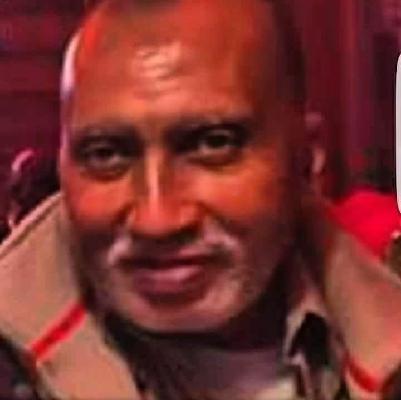
Samuel L. Simmons, a Black man from Nashville, Tennessee, is remembered first as a person, not as a headline. His name carries the weight of a life that mattered in quiet, ordinary ways—through routines, relationships, and the familiar places that make a city feel like home. Even without the full public record of what happened or when it happened, the fact of his death is enough to leave a wound that doesn’t neatly close, because loss rarely arrives with all the answers.
There is a particular kind of ache that settles in when the details are missing. It turns every remembered moment into something sharper: the sound of a voice, a laugh caught on an old message, the way someone used to show up in a room and shift the air without trying. A life is not a timeline, but after death, people reach for timelines anyway—trying to find the last solid point where everything was still normal, still intact, still fixable. When those points are unclear, grief can feel like walking through fog, reaching out for something to hold and finding only emptiness.
Nashville is a city full of movement—streets that stay bright late into the night, neighborhoods that hold memories in their porches and corner stores, and music drifting out of places where strangers become briefly connected. Somewhere within that living, breathing backdrop, Samuel’s story ended. And when a story ends too soon, it leaves behind the unfinished sentences that the living are forced to carry: the questions that won’t stop circling, the “if only” that shows up uninvited, the need to understand not just how someone died, but why they had to.
In the absence of confirmed public details, it becomes impossible to tell the final chapter in a clean, factual way. What remains, instead, is the human truth that death ripples outward. It changes how people look at the streets they once trusted. It reshapes family conversations, turning everyday topics into careful detours around pain. It leaves friends scanning the past for signs they missed, for chances they didn’t know were running out. And it creates a quiet, stubborn determination—an insistence that a person’s name should not fade simply because the world didn’t preserve the story neatly.
When there is no clear accounting of arrests or named suspects to point to, the loss can feel especially unresolved. Justice, for so many families, begins with acknowledgment: a clear statement of what happened, an honest attempt to answer the hardest questions, and a path forward that doesn’t ask survivors to live forever in uncertainty. Without that, grief becomes heavier—because it is not only sorrow, but also the exhausting labor of not knowing.
Samuel L. Simmons deserves more than a brief mention and a blank space where the details should be. He deserves to be spoken of with care, to be held in memory as someone who belonged to a community and left an absence behind. His death is not just an event—it is the aftershock that touches everyone who knew him, everyone who loved him, and even those who only learn his name later and feel the sting of how easily a life can become obscured.
What can be said, plainly and without embellishment, is that a man from Nashville is gone, and that fact should matter. It should matter enough to seek clarity, enough to keep asking what happened, enough to resist the quiet erasure that can follow when answers are scarce. Because even when the record is incomplete, the responsibility to remember is not. And as long as his name is spoken—Samuel L. Simmons—the story has not been entirely swallowed by silence.