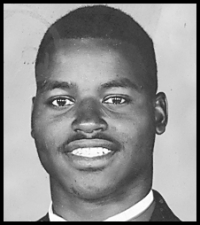
Marico Charles was 27, a Black man from Memphis, Tennessee, when his life was taken. The exact date of his death isn’t included in the information provided, but the absence of that detail doesn’t make the loss any smaller. It simply leaves a blank space where a day on the calendar should be, the kind of empty space that families carry with them—quiet, persistent, and impossible to fill.
He was a young adult, still in that stretch of life where so much is supposed to be ahead. Whatever his routines were—work, friends, errands, late-night talks, plans for the next weekend—those ordinary moments mattered. They were the threads of a life still being woven, the kinds of days that build a person’s story little by little. And then, suddenly, the story was interrupted in the harshest way, leaving the people who loved him to pick up pieces that don’t fit back together.
Memphis is a city of neighborhoods and memory, of streets that hold the echoes of laughter, arguments, music, and prayer. Somewhere in that city, there are corners that still feel different because Marico isn’t there anymore. There are people who remember the sound of his voice, the way he walked into a room, the way his mood could lift or settle the atmosphere around him. Even if the broader world never knew him, someone did—someone knew him well enough to miss him in the everyday ways that hurt the most.
When a person dies violently, the grief is not just grief. It becomes a question that repeats itself, a loop of what happened, why it happened, who did it, and how anyone could do such a thing. It changes how a family looks at time: before and after, then and now. It changes how a mother, a father, a sibling, a friend moves through a day. You can still laugh, still show up, still try to live—but something inside stays turned toward the moment that stole him away, searching for a reason that never feels adequate.
Without names of suspects, without details of arrests, without clear answers in the information available here, his death sits in that painful category where the truth feels just out of reach. That kind of uncertainty can be its own wound. It leaves people holding not only sorrow, but also the weight of not knowing—an unfinished sentence that never stops demanding an ending.
And yet, even in the absence of details, one thing remains clear: Marico Charles mattered. He was not just a headline, not just a statistic, not just a name spoken in past tense. He was a person with a place in Memphis and a place in other people’s lives—someone whose absence changed the shape of the future for those who loved him.
His story deserves tenderness as much as it deserves answers. The kind of tenderness that says his life was real and specific, that his dreams were his own, that his presence left marks on the hearts around him. And the kind of persistence that refuses to let his name fade into the background noise of time, insisting instead that the world remember there was a young man here—Marico Charles—and that he should still be here now.