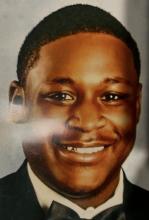
Michael Cheley, a 54-year-old Black male from Philadelphia, Pennsylvania, died after a violent encounter that unfolded on April 3, 2009, on the 1800 block of Mountain Street in Philadelphia. He survived long enough to make it into the next day, but on April 4, 2009, his life came to an end. The details that remain publicly available are painfully limited, leaving behind only the outline of a tragedy: a man’s name, his age, the place where he was harmed, and the date he died.
Michael’s death was recorded as a homicide, marking him as one of the many people lost to violence in Philadelphia that year. Behind that official listing was a real person whose life did not begin or end on a police report or a homicide roster. At 54 years old, Michael had lived through decades of experiences, relationships, struggles, memories, and moments that are not captured in the brief public record of his death. He was someone from Philadelphia, someone whose presence mattered to the people who knew him, and someone whose final moments became part of a much larger pattern of loss in the city.
The incident took place on Mountain Street, a residential block in South Philadelphia where everyday life would have continued around the sudden shock of violence. For the people nearby, there may have been sirens, police activity, questions, fear, and confusion. For Michael’s family and loved ones, there would have been something far heavier: the devastating news that he had been hurt, followed by the heartbreak that he had not survived. A single act of violence left behind grief that could not be measured by the shortness of the public record.
The available information does not explain what led up to Michael being attacked. It does not say whether he knew the person responsible, whether there had been an argument, whether he was targeted, or whether he was simply caught in a moment of violence that escalated beyond control. It does not describe his injuries in detail, and it does not provide a fuller account of what witnesses may have seen or what investigators believed happened. That absence leaves Michael’s story with unanswered questions, and those questions deepen the sadness surrounding his death.
No named suspect, arrest, charges, trial, or conviction have been identified from the information available here. That means the person or people responsible for Michael Cheley’s death were not publicly tied to the case in the details provided. For loved ones, the lack of answers can be its own kind of wound. Losing someone to homicide is already unbearable, but not knowing who caused that loss, why it happened, or whether anyone was held accountable can make the grief even more difficult to carry.
Michael’s death stands as more than a statistic from 2009. He was a man whose life was taken in Philadelphia, and the limited details of his case leave behind a quiet but powerful reminder of how many homicide victims are remembered publicly only in fragments. His name remains attached to a date and a place, but the fuller story of who he was belongs to those who knew him before violence entered the picture.
What is known is that Michael Cheley was harmed on April 3, 2009, and died on April 4, 2009. What is not known, at least from the information provided, is who took his life or whether justice ever came. His story remains one of loss, unanswered questions, and the lingering pain of a life ended too soon.