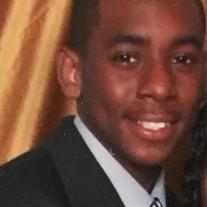
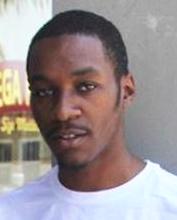
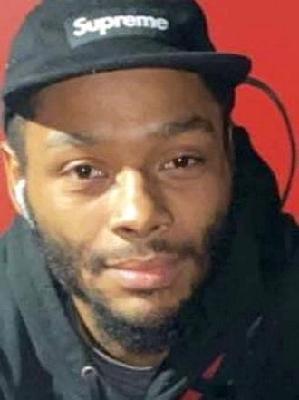
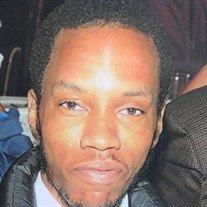
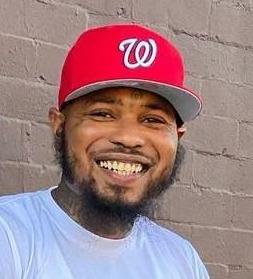
Hasaun Hayes, a 22-year-old Black male from Philadelphia, was killed in September 2010, becoming one of the young lives lost to violence in the city that year. His death was recorded in connection with an assault on the 3100 block of West York Street in North Philadelphia, a place that became part of his story not because of the life he lived there, but because of the violence that ended it.
The publicly available information about Hasaun’s death is painfully limited.
What is known is that he was only 22 years old, still at an age when much of life should have been ahead of him. At 22, a person is often still becoming who they are meant to be, still building toward a future, still connected to family, friends, and community in ways that cannot be captured by a short homicide listing. His name appearing in public homicide records represents far more than an entry on a list. It marks the loss of a person whose life mattered and whose absence would have been felt by those who knew him.
Hasaun’s death was classified among Philadelphia’s homicide victims, indicating that authorities treated his killing as the result of criminal violence. The record places the fatal incident on West York Street, but it does not provide a detailed account of what led up to the assault, who was present, or what circumstances surrounded the attack. There are no clear public details explaining whether the violence was sudden, targeted, connected to an argument, or part of some broader conflict. That absence of information leaves a painful silence around the case.
No publicly available information provided in the prior summary identified any suspect or suspects in Hasaun Hayes’s killing. There was also no confirmed information about arrests, criminal charges, a trial, a conviction, or sentencing connected to his death. Based on the information available, there is no public indication that anyone has been held accountable. That lack of answers makes the case especially difficult, because a homicide without a known resolution leaves behind not only grief, but uncertainty.
For Hasaun’s loved ones, the loss likely became something they had to carry without the comfort of a complete public explanation. A young man was killed, his name was recorded, and the city moved forward, but those who cared about him would have been left with the reality that someone they loved was gone. The facts available online do not tell who he was as a son, brother, friend, neighbor, or loved one. They do not tell what made him laugh, what plans he had, or what kind of future he imagined. But the lack of those details does not make his life any less important.
His death is a reminder of how many homicide victims are remembered publicly only through fragments: a name, an age, a date, a block, and sometimes nothing more. Behind each of those fragments is a full human life, and in Hasaun’s case, the record leaves many questions unanswered. What is clear is that he was young, he was from Philadelphia, and his life ended violently on a North Philadelphia street. What remains unclear is who was responsible and whether justice ever came.
Hasaun Hayes’s story, as it is publicly known, is one of a life cut short and a case with few visible answers. His name deserves to be spoken with care, not reduced to a statistic or a line in a database. Even without extensive public reporting, his death matters. He was a young man whose life ended far too soon, and the limited information surrounding his killing only underscores the need to remember him as a person first, not merely as an unsolved or underreported homicide.