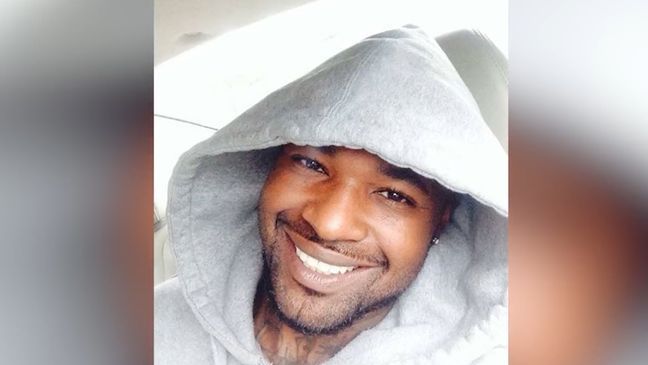
William Prince was a 69-year-old Black male from Oklahoma City, Oklahoma, whose life ended violently on January 8, 2008. That day, he was found dead in the city, and officials determined that his death was the result of “death by force,” a broad classification used for killings brought about by violence rather than illness, accident, or natural causes.
His date of discovery and date of death are both recorded as January 8, 2008, underscoring that whatever happened to him appears to have unfolded and been recognized as fatal within a single winter day.
The public record that survives online sketches only the faintest outline of what followed. Case listings note that his death was formally ruled a homicide, confirming that investigators concluded another person was responsible and that Prince was not simply the victim of an unexplained collapse or misadventure. An article linked to his case from the local newspaper, The Oklahoman, carried the headline “City man’s death ruled homicide,” indicating that this decision was significant enough to warrant coverage in the city’s major daily paper and that authorities wanted the community to know they were treating the case as a killing rather than an unexplained death.
The same case file points to a second Oklahoman story titled “Charge against son amended to murder.” The placement of this headline among the limited set of sources attached to Prince’s case strongly suggests that one of his sons was arrested in connection with his death and charged by prosecutors, with that charge later upgraded to murder as the investigation progressed. The full text of the article is not freely accessible, so many specifics remain hidden: what evidence originally led detectives to focus on the son, how the charge was first framed, what new information persuaded prosecutors to amend it to murder, and how the accused responded in court. Even so, the headline trail shows that the case moved from a suspicious death, to a formally ruled homicide, to a situation in which a close family member stood accused of killing him.
Yet, in the online homicide databases that still carry his name, Prince’s killing remains marked as unsolved. His entry records him as a victim of death by force in Oklahoma City, lists January 8, 2008, as both the date he was found and the date he died, and explicitly notes that the case is not solved, with the record updated into 2025 but still offering no closure. A small forum note attached to the case shows that people continue to discuss his death years later, even debating its appearance on law-enforcement accountability lists, a sign that questions linger not only about who was ultimately held responsible, but also about how the system handled his case.
Taken together, these scattered traces create the story of a man whose life was taken by violence, whose death prompted a homicide ruling and a serious criminal charge against a son, but whose case still appears in public records as unresolved. The details of his final moments, the dynamics within his family, and the ultimate fate of the prosecution are largely absent from the digital record, leaving only the certainty that he was killed and the lingering uncertainty over whether justice, in a clear and final sense, was ever fully achieved.