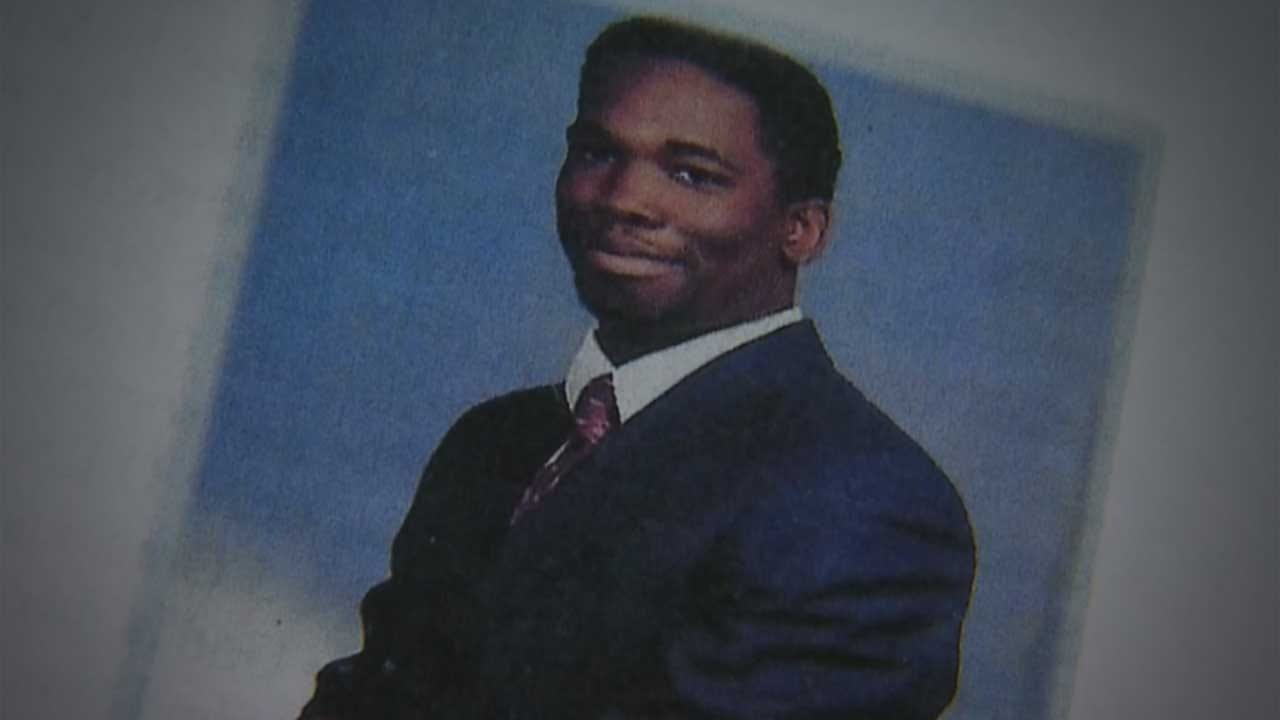
On the evening of May 2, 2009, 28-year-old Marcus Anthony Goodlow, a Black male from Oklahoma City, went to a house along Northeast 29th Street where a brewing dispute with an acquaintance would change everything. Inside the modest residence at 2017 NE 29, words between Marcus and another man, James Greer, escalated from argument to confrontation. What began as a heated exchange between two people who knew each other turned suddenly violent when Greer produced a gun in the close quarters of the
home and fired, leaving Marcus mortally wounded before fleeing into the night.
The shooting, later described in public records as “death by force,” left Marcus critically injured. A public obituary would list his passing as May 3, 2009, reflecting that he died shortly after the encounter, while homicide summaries mark May 2 as the date he was found shot at the house. Together, those accounts paint a picture of a young life cut short over the course of a single night and the following day, the transition from argument to gunfire to death happening with a swiftness that left family and the surrounding neighborhood to absorb the shock.
In the immediate aftermath, investigators focused on the account that Marcus had been in a fight with Greer just before the gun was drawn. Greer, then in his late thirties, was identified as the suspected shooter who had fled from the scene, and another person present in the home, 26-year-old Alisha Farmer, was also drawn into the investigation. Homicide summaries and later true-crime compilations describe Farmer as having been in the house during the confrontation and note that she, too, would be arrested after detectives began to piece together what had happened inside the Northeast 29th Street residence that night.
For months, Greer remained out of reach, and the case moved into the phase where warrants and leads had to do the work that a quick arrest had not. About ten months after the killing, the Oklahoma County sheriff's Warrant Team, working with law enforcement in Idabel in far southeastern Oklahoma, tracked Greer down and took him into custody there, an arrest later highlighted by the sheriff's office as the capture of a wanted fugitive. Public reporting from that period notes that he was originally charged with first-degree murder in connection with Marcus's shooting death, formalizing the allegation that he was the gunman from the Northeast 29th Street house.
Accounts compiled in homicide databases state that Farmer was arrested alongside Greer on complaints related to murder and robbery tied to the same incident, suggesting that investigators believed the violence at the house was intertwined with a robbery scheme rather than a spontaneous argument alone. Those same databases now classify Marcus's case as “solved,” indicating that, from the perspective of law enforcement and case archivists, the combination of the Idabel arrest and subsequent court proceedings resolved who was legally responsible for the killing, even though easily accessible public summaries stop short of spelling out the ultimate verdicts or sentences. Years later, the story of what happened to Marcus continues to live on in online records of Oklahoma City homicides, where his name, the address on Northeast 29th Street, and the arrests of Greer and Farmer remain as a stark reminder of how a single argument inside a home can end with a life permanently taken and a community marked by the loss.