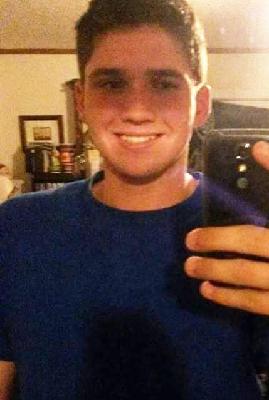
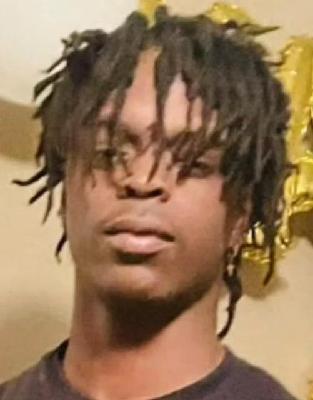
Charles Davis was a 49-year-old Black man from Oklahoma City whose life came to an end on September 16, 2015, leaving behind more questions than answers for the people who knew and loved him. A date on a calendar can look cold and simple, but for his family and friends, that day marked a dividing line between the world as it used to be and a quieter, emptier version of it.
Before that day, Charles was not an entry in a record or a line in an obituary; he was a living presence, someone whose routines, habits, laughter, and frustrations shaped the spaces he moved through. After that day, all of those small everyday things became memories people clung to, replaying them in their minds because there would be no new ones to add.
In the days leading up to his death, life around him would have still been moving at its usual rhythm in Oklahoma City: traffic rolling along familiar streets, kids heading to school, people clocking in and out of work, neighbors exchanging brief greetings on porches and in parking lots. Within that normalcy, Charles occupied his own place, known in different ways depending on who you asked. To some he might have been a relative they saw at holidays and barbecues, to others a coworker they joked with during breaks, to others still just a quiet figure they recognized from the neighborhood. Everyone carries a private world of responsibilities and hopes, and Charles’s were cut short on that September day, leaving many of those hopes unfinished and many responsibilities suddenly shifted onto the shoulders of others.
News of his death would have spread in fragments, the way it often does when something devastating happens. A phone call late at night, a message that seemed too abrupt to be real, someone saying his name with a tone that made the listener’s heart sink before they even heard the rest. Disbelief would have come first for many: the mind’s refusal to accept that a familiar, living person has suddenly become someone who exists only in the past tense. Then, slowly, acceptance would have crept in, accompanied by a heavy mixture of shock, grief, and confusion. People who cared about him would have started piecing together whatever details they could, trying to understand how a normal day had ended in a loss that felt anything but ordinary.
For his loved ones, the days that followed were likely a blur of practical tasks and emotional chaos. There are decisions that have to be made whenever a life ends—arrangements, calls to extended family, paperwork, meetings, and logistics. All of those responsibilities unfold at the same time that hearts are breaking. Someone would have had to choose photos that captured who Charles was, write words that tried to sum up a lifetime, and figure out how to speak about his death without feeling like they were reducing him to a single tragic moment. Grief often comes in waves: one minute numb, the next overwhelmed by the smallest reminder—his handwriting on a piece of mail, his favorite mug left on a shelf, his voice echoing in memory.
In Oklahoma City, the landscape around his life didn’t change overnight. The streets he walked remained the same; the buildings stood where they always had; the sun rose and set as usual. But for his family and community, each familiar place held new weight. There might have been particular corners of the city that felt haunted now, not by anything supernatural, but by the knowledge that he would never be seen there again. A neighborhood convenience store, a bus stop, a friend’s porch, or a spot at a kitchen table could become, in their own quiet ways, memorials. People who had shared those spaces with him might find themselves pausing there, thinking about the last conversation they had, or wishing they had said more, or said something kinder, when they’d had the chance.
The absence of clear, widely known details about exactly how Charles died, who was with him in his final moments, or how authorities responded only deepens the sense of unfinishedness around his story. When there are no public answers, the imagination fills the gaps, often in painful ways. Those who loved him are left to carry not just the grief of losing him, but the frustration of not being able to clearly explain what happened to anyone who asks. It can feel as though the world has moved on, that his name did not echo loudly enough beyond the circle of people who knew him personally, that his death did not receive the attention it deserved. That sense of quiet around his story can itself be a wound.
Yet even without a detailed public record of what happened on September 16, 2015, the significance of Charles’s life does not depend on how completely the facts were captured in news articles or official reports. The true record of his existence lives in the people who remember him: in the jokes that still get retold, in phrases he used to say, in the lessons he taught without realizing he was teaching them. It lives in the children or younger relatives who might have looked up to him, in the friends who still instinctively think of him when certain songs play, certain foods are cooked, or certain topics come up in conversation. Those memories form a constellation of moments that, taken together, say far more about who he was than any brief written summary ever could.
As time goes on, the raw edges of grief may soften, but the loss itself remains. Anniversaries like September 16 can still hit hard, even years later. They can be days when someone in his family wakes up with a heaviness they cannot quite explain until they look at a calendar and realize why. On those days, they might revisit old photos, share stories, or simply sit with their thoughts, acknowledging how much has changed since the year 2015 and how differently life might have looked if Charles were still here to see it. The ordinary passing of time—holidays, birthdays, graduations, and quiet Sundays—becomes a measurement of all the moments he was not there for.
The story of Charles Davis, as it can be told from what is known, is not just about the fact that he died in Oklahoma City on a specific date. It is about the fact that he lived, that he was part of a network of relationships, routines, and dreams that shaped the lives around him. It is about a family and community who had to learn how to carry on without him, how to honor him in ways big and small, and how to keep his name from fading even when the larger world may not know much about what happened. His life, and the grief that followed his death, are both real and meaningful, even if the wider public record does not capture every detail.