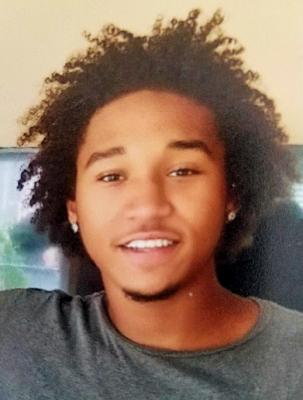
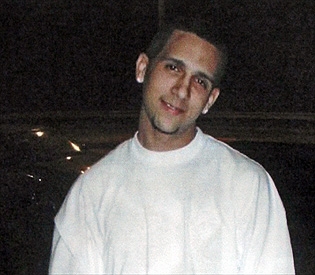
In the spring of 1971, George H. Matthews was a young man of 22, navigating the vibrant and often turbulent streets of Boston, Massachusetts. The city was a place of immense change, grappling with social shifts and a rising crime rate that would mark the decade. For George, a male resident of the city, life was unfolding day by day in the Roxbury neighborhood, a community rich in history but also facing significant economic and social challenges during that era. His future, full of the promise and potential of any young person's life, was waiting to be written.
That future was stolen on the evening of Saturday, April 10, 1971. At approximately 9:45 p.m., the Boston Police Department received a distress call reporting a person shot at 3 Akron Street in Roxbury. Officers and emergency personnel were dispatched to the address, a residential street nestled in a dense urban neighborhood. When they arrived, they discovered George H. Matthews suffering from a gunshot wound.
Despite the efforts of first responders, he was pronounced deceased at the scene, his life cut tragically short in an act of sudden violence.
The investigation into George’s death began immediately, handled by homicide detectives from the Boston Police Department. In 1971, forensic science was a world away from what it is today. Detectives had to rely on traditional methods of investigation: canvassing the neighborhood for witnesses, interviewing family and friends, and trying to piece together the victim's final hours to understand who he might have encountered. The Office of the Chief Medical Examiner conducted an autopsy and officially ruled the manner of death a homicide, confirming that George had been killed by another person.
The area of Akron Street in Roxbury, where the shooting occurred, was a challenging environment for police investigations. Fear and a deep-seated mistrust of law enforcement could make potential witnesses hesitant to come forward. Detectives worked the case, chasing down every lead and examining every piece of evidence they could gather from the scene. However, despite their efforts, the trail grew cold. No suspect was publicly identified, and no arrests were made. The initial flurry of activity slowed, and George's case file was eventually moved to the department's growing collection of unsolved homicides.
The year 1971 was a particularly violent one in Boston, and George’s murder was one of many that detectives contended with. The Boston Police Department's own records for that year list numerous homicides, several of which occurred within weeks or even days of George's death. This overwhelming caseload stretched departmental resources thin and meant that cases without immediate, strong leads were incredibly difficult to solve. Each unsolved case represented a family left without answers and a community living with the knowledge that a killer remained at large.
For more than five decades, the murder of George H. Matthews has remained unsolved. The Boston Police Department continues to list his case on its official unsolved homicides page, a silent testament to a life taken too soon and a quest for justice that has never officially ended. As years turn into decades, the hope of solving such cases often rests on the emergence of new information or advancements in forensic technology that can re-examine old evidence. A witness who was too afraid to speak in 1971 may, for reasons of conscience, finally decide to come forward. A small piece of physical evidence, carefully preserved for years, might now yield a DNA profile that was impossible to extract at the time.
The case of George H. Matthews is a quiet but persistent appeal for information. The Boston Police Department's Unsolved Homicide Unit periodically reviews cold cases like this one, hoping for a breakthrough. They urge anyone who may have seen or heard something on Akron Street on that April night in 1971, no matter how insignificant it may have seemed at the time, to contact them. Someone, somewhere, still holds the key to understanding what happened to George and providing his family with the closure they have been denied for over half a century. The Boston Police Department Homicide Unit can be reached at (617) 343-4470.