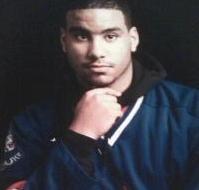
In the heart of a bitter Boston winter, during a month marked by record-breaking cold, a life was violently cut short in the city’s largest and most populous neighborhood. The name of the man who died was Rachon Davis. He was 30 years old. Beyond these spare facts, his story is a painful void, his life and personality known only to those who loved him and his death a cold, unsolved statistic in the city’s archives. For more than two decades, the questions of who killed him and why have remained unanswered, leaving a legacy of silence and unresolved grief.
The night of Wednesday, January 28, 2004, was frigid in Boston. An arctic chill had gripped New England for weeks, plunging temperatures into the single digits and below zero. It was on this cold night that the Boston Police Department received a call for a person shot at 5 Rockwell Street in Dorchester.
When officers arrived at the address, a residential street lined with triple-decker homes just off Blue Hill Avenue, they found Rachon Davis. He had been shot and was pronounced deceased at the scene. The Office of the Chief Medical Examiner later officially ruled the manner of his death a homicide.
The investigation into Rachon’s murder was launched by the Boston Police Department's Homicide Unit, a team of detectives tasked with solving the city's most violent crimes. The year 2004 was part of an era that saw a nationwide decline in crime rates from their peaks in the 1990s. However, urban violence remained a persistent challenge. In a neighborhood as sprawling and diverse as Dorchester, which was home to nearly one-fifth of Boston's residents, investigations could be particularly complex. Detectives often rely on witnesses and community cooperation, but fear and a "no-snitching" culture can create formidable walls of silence.
Rockwell Street is a short residential road in a part of Dorchester that has seen significant demographic and social change over the decades. Founded in 1630, Dorchester was a rural town for much of its history before being annexed by Boston in 1870. The arrival of streetcar lines transformed it into a classic American "streetcar suburb," and its iconic triple-deckers housed waves of Irish, Jewish, Polish, and Italian immigrants. By the 21st century, it was a vibrant, multicultural community, but certain areas continued to struggle with higher rates of violent crime.
The detectives assigned to Rachon Davis's case would have canvassed Rockwell Street, knocking on doors and searching for anyone who saw or heard something that night. They would have processed the crime scene for forensic evidence—shell casings, fingerprints, or any trace of DNA that could identify a suspect. But no arrests were ever made. No suspects or persons of interest have ever been publicly named. The specific details of the shooting, including a potential motive or whether Rachon was the intended target, have never been released to the public.
As the years turned into decades, Rachon Davis’s case grew colder. His name is now one of several dozen listed on the Boston Police Department’s webpage for unsolved homicides from 2004. There are no public memorials, no anniversary vigils, and no family statements to be found in public records or news archives. This profound absence of information makes his case particularly haunting, a story without a beginning or a middle, only a brutal end on a cold winter street. The memory of who Rachon was—his work, his passions, his family, his friends—is held only in the private hearts of those who knew him.
The Boston Police Department has not forgotten Rachon Davis. His case remains open, waiting for the one piece of information that could break it open. Detectives believe that even years later, someone in the community may hold the key to solving this murder and bringing a measure of justice to a family that has waited for answers for over twenty years. The department continues to ask for the public's help. Anyone with information is urged to contact the Boston Police Homicide Unit at 617-343-4470 or to share a tip anonymously through the Crime Stoppers Hotline at 1-800-494-TIPS.