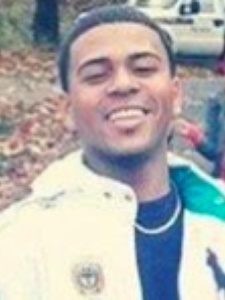
In the spring of 1974, Ernest Wilson was a young man of 22, navigating life in a city undergoing profound and often turbulent change. Very little is publicly known about Ernest, the specific path his life was taking, his family, his work, or the dreams he held. He was a male resident of Boston, a city then grappling with economic decline and deep-seated social strife. His life was cut short just as it was truly beginning, leaving behind a void of information and unanswered questions that have persisted for decades. What is known is that he became one of more than a dozen individuals whose homicide in Boston that year would remain unsolved, his name etched onto a list of lingering tragedies.
The evening of Tuesday, May 21, 1974, ended in violence on a residential street in Boston's largest and most diverse neighborhood. Police officers were dispatched to 33 Regina Road in Dorchester following a report of a person shot. There, they discovered Ernest Wilson.
He was pronounced deceased at the scene. An autopsy conducted by the Office of the Chief Medical Examiner would later confirm the cause of death was a gunshot wound and officially rule the manner of death a homicide. The brief, stark details released by the police provided the what, where, and when, but offered no insight into the why or who.
The investigation into Ernest Wilson’s murder was launched by the Boston Police Department. In the 1970s, homicide investigations relied heavily on witness testimony and information gathered from the community. Detectives would have canvassed the neighborhood, a collection of multi-family homes typical of the area, speaking with anyone who might have seen or heard something unusual that night. They would have delved into Ernest's background, seeking a motive or a potential suspect among his acquaintances. However, no arrests were ever made, and no persons of interest have ever been publicly named in connection with his death.
The mid-1970s were a difficult period for the city of Boston, and particularly for neighborhoods like Dorchester. It was a time of significant demographic shifts, economic hardship, and intense racial tensions, most notably surrounding the court-ordered school desegregation and busing crisis that began that same year. The social fabric of many communities was strained, and a sense of unease was palpable on the streets. While there is no stated connection between the broader societal conflicts and Ernest’s murder, his death occurred against this backdrop of a city on edge, a place where violence could erupt with devastating consequences.
Decades have passed since Ernest Wilson was killed, and the trail for investigators has grown cold. Evidence that might have existed at the time, such as fingerprints or ballistic information, would have been processed using the forensic technology of the era. Without modern advancements like widespread DNA databases, many older cases relied almost entirely on direct evidence or witness cooperation that, in this instance, did not lead to a resolution. The Boston Police Department has not released any further information about the investigation in the intervening years.
The case of Ernest Wilson is now officially classified as a cold case. It remains an open and unsolved homicide investigation with the Boston Police Department, listed on its public registry of unsolved killings from 1974. There is no information available about any memorials, vigils, or statements from family or friends. For more than half a century, the silence surrounding his life and the circumstances of his death has been profound. As of today, no reward has been publicly offered for information. The Boston Police Department continues to ask that anyone with information, no matter how insignificant it may seem, to come forward.