Crime Solvers Central
307 Cases Solved. Advancing justice for missing persons, unsolved homicides, unidentified and unclaimed remains.

Case Description

Any updates on this case? Let us know!
Summary based on 6 sources
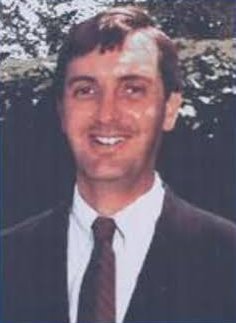
Kerry Arbon was an intensely private man who lived a bifurcated life. To his family and community in Orem, Utah, he was a devoted son, a former Brigham Young University music student and teacher, and an accomplished church organist who cherished his Latter-day Saint faith. Raised on a family farm in Burley, Idaho, his passion for music was undeniable from a young age. His sister, Kathie Driggs, recalled a family trip when an 8-year-old Kerry saw the organ in the Salt Lake Tabernacle and confidently told his mother he would one day play it. True to his word, he dedicated himself to the instrument, with his mother driving him two hours each way for lessons every Saturday. Standing over six feet tall and weighing 200 pounds, Kerry was a noticeable presence, yet he kept a significant part of his life hidden from those closest to him.

In his late 20s, Kerry Arbon, a 40-year-old man, moved into the basement of his mother Nell's home in Orem. He began taking regular weekend trips to Salt Lake City, telling his family he was attending events like the Greek Festival or the state fair. In the city, however, he became "Doug Sorensen," an alias he used while navigating his life as a closeted gay man. Friends in the city knew him at gay bars like the former Radio City Lounge and in Memory Grove, a park known at the time as a meeting place for gay men seeking companionship. This secrecy, detectives later noted, was likely rooted in his deep connection to his church, which in the early 1990s held condemnatory views on homosexuality.

On Monday, September 9, 1991, Kerry told his mother he was heading to Salt Lake City for the Greek Festival. When he didn't return by Wednesday, she reported him missing to the Orem police. Around the same time on September 11, a British tourist bicycling in the City Creek Canyon area of Salt Lake City, near Memory Grove, stopped and stepped into the brush. There, he discovered Kerry Arbon’s body. He had been shot multiple times in what police described as an execution-style killing. Investigators believed he had been killed on the night of Sunday, September 8. His red 1984 Toyota Camry was missing from the scene.

The Salt Lake City Police Department launched a homicide investigation, but the case was difficult from the start. There was very little physical evidence at the crime scene. Memory Grove and the surrounding canyon were known as a "cruising area," and police had investigated numerous robberies and assaults targeting gay men there, a crime pattern nicknamed "queer-rolling." Kerry's murder, however, was an extreme escalation of that violence. His car was recovered about a month later, abandoned in a Salt Lake City parking lot.

Over the years, the investigation stalled and the case went cold. Decades later, reviews by the Salt Lake City Police Department's cold case unit, including semi-retired detective Cordon Parks, revealed potential missed opportunities in the original 1991 inquiry. A notebook found in Kerry’s car contained names, phone numbers, and license plates that were apparently never investigated. Reports also indicated that white supremacists known to harass gay men were active in Memory Grove around the time of the murder, but there is no record they were ever interviewed. Detectives who later reviewed the files noted the lack of documentation, though they also acknowledged the technological limitations and different record-keeping standards of the era.

Kerry's family was unaware he was gay and did not know why he would have been in that part of the canyon. His sister, Kathy Driggs, later said the family had come to terms with his death but hoped the killer had not harmed anyone else. "He didn't deserve to have what happened to him," Detective Greg Wilking said in 2017. In an effort to generate new leads, the police department has used grant funding to feature Kerry's case on a billboard off Interstate 15 with his picture and the question, "Who murdered me?"

As of a July 2025 report by The Utah Investigative Journalism Project and The Salt Lake Tribune, Kerry Arbon's murder remains unsolved. The Salt Lake City Police Department cold case unit continues to review the file, holding out hope that allegiances have changed over three decades and that someone with information will finally come forward. "We're never going to let these cold cases go away," Detective Wilking stated. "We're going to continue to look at them and reexamine them."

Anyone with information about the murder of Kerry Arbon is asked to contact the Salt Lake City Police Department's homicide unit at 801-799-3000. Anonymous tips can be left at 801-799-4636 or by texting TIPSLCPD and a message to 274637.