Crime Solvers Central
302 Cases Solved. Advancing justice for missing persons, unsolved homicides, unidentified and unclaimed remains.

Case Description

Any updates on this case? Let us know!
Summary based on 4 sources
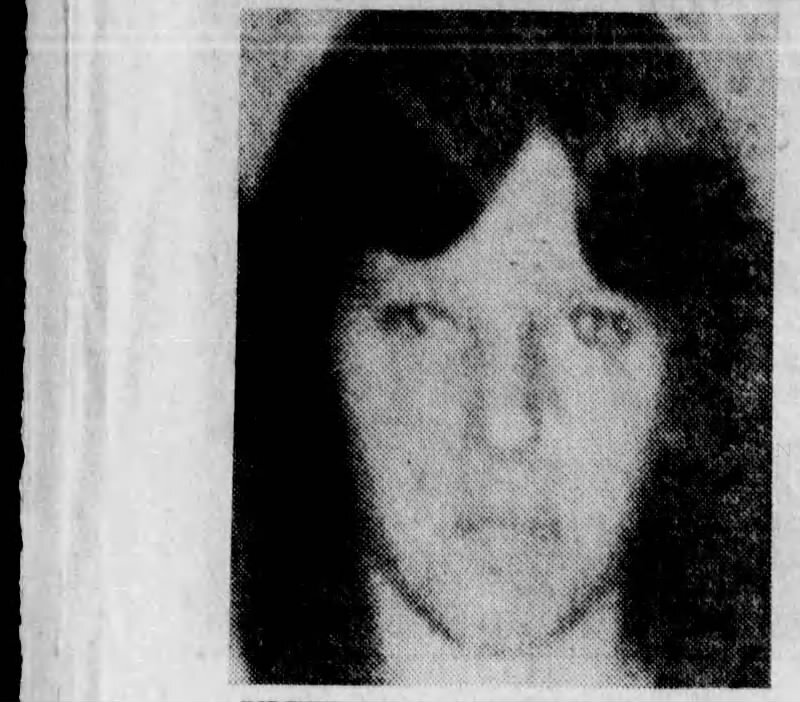
Elizabeth Jean Getchell, known to some as “Betty,” was a 14-year-old high school student living in Minneapolis in the spring of 1976. She was petite, standing five feet tall and weighing 100 pounds, with green eyes and brown wavy hair. Like many teenagers of her era, she wore bell-bottom Wrangler jeans and tennis shoes. Her life, full of the promise of youth, was brutally cut short in a crime that has remained unsolved for decades, leaving a lasting scar on the community.

In the early morning hours of Saturday, April 3, 1976, a passerby made a devastating discovery on the front lawn of a residence at the corner of St. Anthony and Lyndale avenues in south Minneapolis. At around 6 a.m., they found Elizabeth’s body and immediately called the police. Investigators arriving at the scene were met with a horrific tableau. The young woman had been sexually assaulted, severely beaten, and strangled. An autopsy would later detail lacerations to her scalp and lip, as well as abrasions on her face, chin, and leg.

The last time Elizabeth was seen alive was by a friend around 11 p.m. the previous evening, Friday, April 2. She was reportedly hitchhiking at the intersection of Franklin and Lyndale avenues, not far from where her body would later be found. She was wearing a long-sleeved blue sweater, her jeans, and multicolored socks. When she was discovered, her right ring finger was adorned with five rings, a leather band was on her right wrist, and two metal chains were on her left. The weapon used to end her life was a leather cord necklace with a bald eagle pendant, which had been used to strangle her. In a final act of depravity, her killer had stuffed a pair of turquoise women's underwear into her mouth.

The Minneapolis Police Department and the Minnesota Bureau of Criminal Apprehension (BCA) launched an immediate and intensive investigation. In the days following the murder, newspaper headlines focused on the fact that Elizabeth had been hitchhiking, a detail that law enforcement emphasized as they warned other young women of the potential dangers. Her death came four years after the similar slaying of 16-year-old Joli Truelson, another Minneapolis teen killed while hitchhiking, amplifying public fear and concern.

Despite public appeals for anyone who might have seen Elizabeth on that Friday night to come forward, the case grew cold. For years, there were no significant breaks, and the identity of her killer or killers remained a mystery. The physical evidence collected from the crime scene and the autopsy—including her pants, bra, the necklace, and biological swabs—was meticulously preserved, a standard practice that held the only hope for future answers.

That hope gained new life in 2012, when advancements in forensic science allowed investigators to re-examine the evidence. The swabs collected from semen samples yielded a significant breakthrough: multiple DNA profiles. These profiles were entered into state and national DNA databases, where they are continuously compared against the profiles of known offenders. However, this promising lead has so far led to a frustrating dead end. As of a July 2026 report, no matches have been identified. It is not publicly known if investigators have pursued forensic genetic genealogy, a technique that has helped solve other cold cases by tracing DNA to family trees.

Decades have passed, but the brutal murder of Elizabeth Jean Getchell is not forgotten. The case remains open and is still under the purview of the Minneapolis Police Department and the Minnesota Bureau of Criminal Apprehension. The DNA profiles preserved from the evidence remain the most critical key to potentially solving the crime and finally bringing justice to a 14-year-old girl whose life was stolen on a spring night.

The Minnesota Bureau of Criminal Apprehension continues to ask for the public’s help. Anyone with any information regarding the case, no matter how insignificant it may seem, is urged to contact the BCA Tip Line at 877-996-6222.