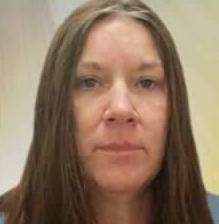
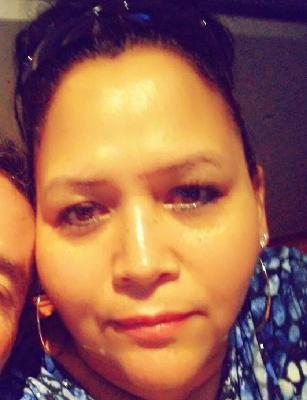
Tonja Maria Hook, a 35-year-old female, was trying to get her life on track in the summer of 2003. She had struggled with drug addiction and had been working as a prostitute in Lawton, Oklahoma, but her family said she was trying to get away from that life. She was a mother to a teenage daughter and was loved by a family who hoped for her recovery. Her mother, Linda Williams, described her as a "very sweet, loving person" who had simply gotten involved with the wrong crowd. Tonja had been living in an apartment in the Cache Road area of Lawton, a part of the city that would later become known for a string of unsettling disappearances.
On June 30, 2003, after not hearing from her for a while, Tonja’s mother grew worried and reported her missing to the Lawton Police Department. The last time her family had seen her was about a week prior. Williams recalled that Tonja had seemed scared and had told her she felt like someone was watching her. She had also spoken of a man who had supposedly threatened her. The search for Tonja began, but weeks turned into months with no sign of the missing woman.
The agonizing wait for answers came to a grim end on August 29, 2003. Skeletal remains were discovered in a roadside bar ditch near State Highway 74B in a rural part of McClain County, about 80 miles from where Tonja was last seen. The location was isolated, not a place someone would likely be by chance. Using dental records, the state medical examiner positively identified the remains as those of Tonja Maria Hook. Her death was officially ruled a homicide, but the cause of death was listed as undetermined due to the condition of her remains.
The Oklahoma State Bureau of Investigation (OSBI) took the lead on the homicide case. Investigators noted the disturbing context of Tonja's disappearance. She was one of at least five women, many of whom were known prostitutes, who vanished from the Lawton area between 2002 and 2004. The disappearances raised fears of a possible serial killer preying on vulnerable women along the Interstate 44 corridor. While law enforcement has explored connections between the cases, no definitive link has been officially established, and each case is investigated on its own merits.
Over the years, Tonja’s case has grown cold, but it has never been closed. Her family has continued to seek justice and keep her memory alive. Her mother, Linda Williams, has spoken out numerous times, pleading for anyone with information to come forward. "Somebody knows something," she stated in an interview years after the murder. "I just want to know why. Why did they have to kill her?" The family has held onto hope that new technology or a pang of conscience might one day lead to a breakthrough.
As of October 2026, Tonja Hook's murder remains an active, unsolved case with the OSBI's Cold Case Unit. Detectives continue to seek the piece of information that will identify the person or persons responsible for her death. No suspects or persons of interest have ever been publicly named. Tonja’s family is left with the painful memory of her life being cut short and the unanswered questions surrounding her final moments.
The Oklahoma State Bureau of Investigation urges anyone with information regarding the homicide of Tonja Maria Hook to contact them. Tips can be submitted to the OSBI's confidential tipline at 1-800-522-8017 or via email at [email protected]. No detail is too small, and those who know something can choose to remain anonymous.