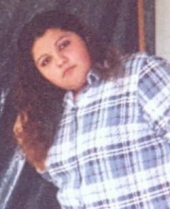
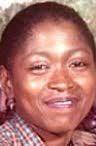
Anna Roberta Lara was a 38-year-old woman from Oklahoma City, whose race was listed in case records only as “Other.” Born on October 30, 1971, in Denver, Colorado, she spent her early years in that state before life pulled her south to Oklahoma. After the death of her mother, Adela Castillo, she was raised by her aunt, Lucia Diaz, whom she lovingly called “mother,” and grew up in a tight, extended family that included cousins she regarded as brothers and sisters.
As an adult she built a life centered on her children and family; obituary tributes remember her son Hector, her daughters Natalia and Yesenia, a young granddaughter, and a circle of aunts, cousins, goddaughters, and close friends who describe her as warm, funny, and deeply loved. In memorial messages posted over the years, relatives and friends talk about holidays shared together, the way she talked constantly about her kids, and how her absence left a daily ache that time has never really eased.
In the early hours of May 28, 2010, Lara’s life intersected with a moment of sudden, escalating violence on a quiet Oklahoma City street. According to police and later case summaries, she was riding in a dark-colored car with a man she knew when an argument broke out between them. The dispute grew heated enough that Lara and a female friend got out of the vehicle near the intersection of NW 9th Street and Indiana Avenue, in the 1700 block of NW 9, and began to walk away on foot. Instead of leaving the scene, the driver circled back; investigators later said that he intentionally steered the car toward the two women, striking both of them. Lara’s friend suffered comparatively minor injuries, but Lara was critically hurt in the impact. She was rushed to OU Medical Center, where doctors were unable to save her; she died there that morning.
From the outset, Oklahoma City police treated the case as a homicide, not a traffic accident. Contemporary reporting noted that officers described the crash as a deliberate act following the argument in the car, with witnesses telling investigators that the driver had run Lara down on purpose after she tried to walk away. Police released a detailed description of the suspect: a Hispanic man in his early twenties, driving a dark blue four-door car, said to have severe acne, very short or shaved hair, and a small ponytail at the back. Detectives appealed to the public for help, asking anyone who recognized the driver or the vehicle to call the Oklahoma City police homicide tipline, and local coverage emphasized that officers were actively searching for the man who had fled the scene.
In the years that followed, Lara’s family and friends mourned her in the private space of guest books and memorial pages while the case quietly shifted into the realm of unsolved homicides. The funeral notices simply state that she “died as a result of an auto accident,” listing arrangements for a June 2, 2010 service in Oklahoma City and burial in Burkburnett, Texas, reflecting the way families sometimes soften the harshest details of a violent loss. Public case summaries, however, continue to describe a deliberate hit-and-run born out of an argument, and they still frame her death as an open case, inviting anyone with information to come forward with updates. Those listings, some of which have been updated as recently as 2025, contain no mention of a named suspect being arrested or charged, and the continued appeals for information strongly suggest that, in the public record, the man who drove that car has never been formally identified or brought to justice.
Today, what remains on the record is a portrait in fragments: a Denver-born daughter and mother who found a home in Oklahoma City; a close-knit family that still leaves messages of love and remembrance more than a decade later; and a brief, violent encounter on a street in northwest Oklahoma City that ended with her fatally injured on the pavement while the driver sped away into the dark.