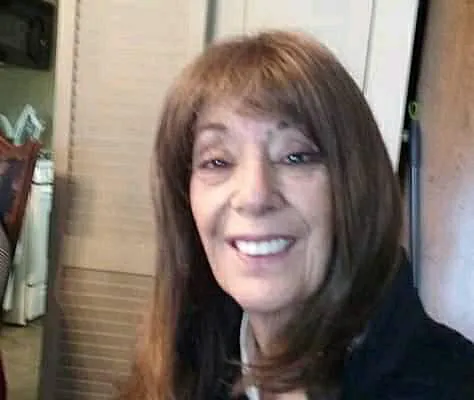
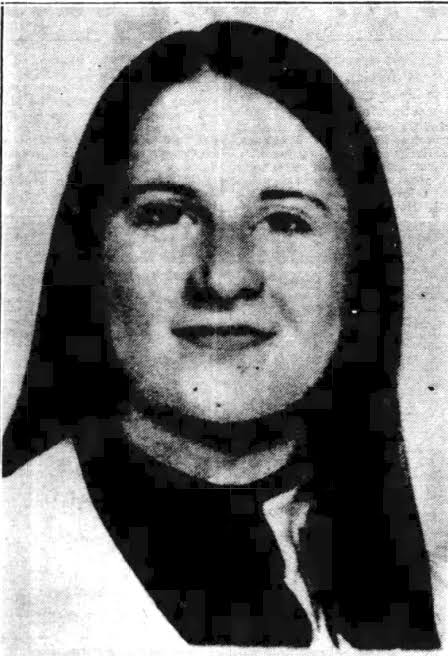
In the autumn of 1964, New York City was a hub of cultural change, but beneath the surface of a bustling metropolis, a series of shocking crimes would unfold, leaving a lasting scar on the city's memory. One of the most disturbing of these was the homicide of Jocelynn Carr, a 32-year-old female employee at a prestigious advertising agency, whose life was cut short in a brutal and mysterious manner that continues to baffle investigators decades later.
Jocelynn lived with her mother, Evelyn Carpenter, and her stepfather, Russell Earl Carpenter, an electrical engineer, in an apartment at 1059 First Avenue, near East 57th Street in Manhattan. She worked as a clerk for the prominent Compton Advertising Agency, then located on Madison Avenue. On the evening of Tuesday, October 20, 1964, around 7:00 p.m., Jocelynn’s mother saw her leave their apartment. Jocelynn was on her way to a date in the Yorkville neighborhood and was seen getting on a First Avenue bus. She was expected at the East 78th Street apartment of her 37-year-old boyfriend, a waiter, but she never arrived. When she failed to return home, her mother reported her missing to the local police precinct.
The missing person case took a horrifying turn the following day, October 21. Over the course of the day, a gruesome discovery began to unfold across Manhattan's West Side. Jocelynn's torso was found first, hidden beneath an outdoor stairway that led to the basement of a building at 463 W. 43rd Street, near Tenth Avenue. Later, more of her remains were located. Her legs, which had been sawn in half, were found inside a green suitcase, or valise, that had been discarded with trash near the corner of Ninth Avenue and W. 35th Street. Her arms were discovered under a metal staircase at 433 W. 28th Street. Tragically, Jocelynn Carr’s head was never recovered.
The New York Police Department, with Lieutenant Joseph G. Calhoun leading detectives from the 47th Street Station, launched a major investigation. An anonymous "civic minded person" who knew Jocelynn's parents called the station and suggested they contact the family, which led to her formal identification. The medical examiner's office determined that the dismemberment was crude, likely carried out with a serrated knife and a saw. However, an examination of the recovered remains showed no signs of gunshot or knife wounds. This led investigators to theorize that she may have been strangled, but without her head, an official cause of death could not be determined and remains unknown. Police interviewed her boyfriend several times, but he maintained that she never showed up for their date.
Jocelynn’s murder was one of several dismemberment cases that terrorized the New York area that autumn. Just a few weeks later, on November 15, the partial remains of another woman, Carmen Rodriguez, also known as Carmen Muñoz, were found in a lot in the Bronx. The similarities were unsettling, though police never officially linked the cases. The press followed the investigation into Jocelynn's death closely, but by mid-November, reports stated that police had no suspects. The trail went cold, and the case faded from the headlines, leaving a void of unanswered questions.
Decades have passed, but the murder of Jocelynn Carr remains an open and active cold case with the NYPD. As of February 2026, her killer has never been identified, and the motive behind the shocking crime is a mystery. The brutality of her death, compounded by the public and scattered disposal of her remains, marks it as one of New York City's most haunting unsolved homicides from that era. The case serves as a grim reminder of a violent autumn in the city's history and the enduring pain of a family that never received justice.