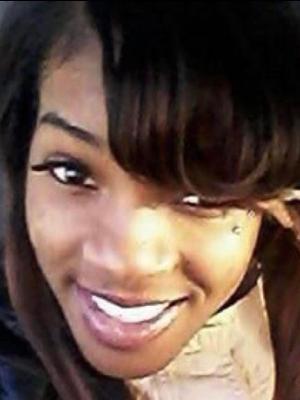
In the summer of 2002, a young woman named Jody Grissom was brutally murdered in Chicago, Illinois, her life cut short at just 20 years old. Her death was not an isolated tragedy but one thread in a terrifying and complex web of violence that has left a scar on the city for decades. Jody, a white female, became one of more than 50 women whose unsolved killings are believed to be the work of one or more serial killers often referred to as the Chicago Strangler.
On August 14, 2002,
Jody’s body was discovered in an alley. She had been strangled, a method that matched a disturbing pattern of homicides that began in 2001. Like many of the other victims, she was left in a desolate, out-of-the-way location—a place where her killer or killers could easily slip away. Her case remains unsolved, and specific details about the investigation into her death are scarce, subsumed by the enormity of the larger killing spree.
The series of murders Jody is linked to involves at least 51 women, and possibly as many as 75, who were killed between 2001 and 2018. The victims were predominantly, though not exclusively, Black women. Many were found on the city's South and West Sides, their bodies disposed of in abandoned buildings, garbage cans, parks, and alleys. The primary causes of death were consistently identified as strangulation or asphyxiation. This chilling consistency in method and victimology led the Murder Accountability Project, a nonprofit watchdog group, to identify the cluster of unsolved cases and sound the alarm about a potential serial killer.
Despite the clear patterns, the official response has been a source of frustration and pain for the victims' families and community advocates. For years, the Chicago Police Department has maintained that there is no definitive evidence to link all 51 murders to a single offender. In 2019, following public pressure, the department announced it would review the cases and assigned a team of detectives to re-examine forensic evidence. However, this review has not led to a breakthrough in most of the cases, including Jody's.
The lack of progress is compounded by a scarcity of DNA evidence. In a crime as physically intimate as strangulation, the absence of genetic material in many of the cases has puzzled investigators. Some experts, like those at the Murder Accountability Project, have suggested this may indicate a forensically aware killer or killers who are careful not to leave behind traces of their identity.
For years, the names of these women, including Jody Grissom, were little more than data points in a grim statistic. They were daughters, sisters, and mothers whose stories were often overlooked. Activists and journalists have worked to bring their names and faces to the forefront, demanding justice and remembrance for each one. They argue that the victims' vulnerabilities—in some cases, struggles with addiction or involvement in sex work—made them easy targets for a predator and, tragically, led to their cases receiving less attention.
Today, Jody Grissom’s case remains open and cold. There has been no justice for her, and no one has been held responsible for her murder. Her name is part of a somber roll call of the "Unforgotten 51," a testament to a long-unsolved mystery and a community's persistent fight for answers. The hope is that one day, a tip, a new look at old evidence, or a long-overdue confession will finally bring closure to her family and solve the question of who was responsible for the violence that ended her young life.