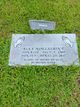
In the spring of 1927, a shadow of fear had already fallen over Tampa, Florida, after a series of brutal, unsolved slayings. That fear would culminate in a horrific act of violence that claimed the lives of an entire family, including 11-year-old Ralph Merrell. The Merrell family had only recently moved into their home on the corner of 1st Avenue and 31st Street, tragically unaware that they had settled in a place marked by a killer's mistaken quest for revenge.
For six weeks, they had made a life there; the father, Herman "Looney" Merrell, a carpenter, and his wife, Nettie, who operated a drink stand, were raising their children in the bustling city.
The night of May 27, 1927, shattered their lives forever. The family was attacked in their beds by a man wielding a railroad spike maul. The devastating discovery was made by 15-year-old Kenneth Merrell when he returned home from a night spent with friends in St. Petersburg. Inside the quiet house, he found his father, Herman; his mother, Nettie; and three of his younger siblings brutally murdered. The victims were Ralph, his 5-year-old sister Mildred, and the family's youngest, 5-week-old infant son, Lester. Miraculously, two other children survived the massacre. Eight-year-old Hugh was in the house during the attack but had fallen from his bed and gone unseen by the killer. Another older brother, Gilbert, was away from the home at work.
The investigation quickly focused on a 38-year-old itinerant worker named Benjamin Franklin Levins. The day after the murders, Lieutenant D. Z. Meeks of the Tampa Police discovered a makeshift campsite in a lumber yard half a mile from the Merrell residence. Someone had been sleeping there, leaving behind scraps of a loaf of bread, hand-rolled cigarette butts, and a newspaper detailing the very murders that had just been committed. Officers staked out the location and arrested Levins there shortly after midnight. A key piece of evidence was Levins's habit of breaking matches in a distinctive way, a detail that matched broken matches found at the crime scene.
Levins was connected to a string of at least nine other murders that had terrorized Tampa between 1926 and 1927. Among them was the axe murder of the Rowell family a year prior. It was this earlier crime that tragically led the killer to the Merrells' door. Police theorized that Levins had returned to the house intending to kill the Ryles family, who had previously lived there. Mr. Ryles had provided police with information regarding the Rowell murders and, fearing for his family's safety, had moved away. The Merrells had moved in just six weeks before the attack. After being taken to the morgue to view the bodies of his victims three times, Levins confessed, confirming he had killed the wrong family and only realized his mistake after reading about it in the newspaper.
During his trial in Orlando in July 1927, Levins changed his story multiple times. His defense claimed his confession was coerced by police who threatened to return him to Tampa, where an angry mob of thousands had already attempted to lynch him. Levins testified that he had killed Herman Merrell in self-defense after being caught breaking into the house, and he blamed the other murders on an acquaintance, Leonard Thompson. Despite his shifting accounts, a jury convicted Benjamin Franklin Levins of five counts of first-degree murder for the slaughter of the Merrell family.
Thompson was acquitted in a separate trial. Levins was sentenced to death for his crimes. He spent his final hours praying and maintaining his innocence but offered no formal last statement. On November 22, 1927, Benjamin Franklin Levins was executed in the electric chair. His body went unclaimed and was buried in the prison cemetery, closing a terrifying chapter in Tampa's history but leaving an irreplaceable void in the lives of the surviving Merrell children and their relatives.