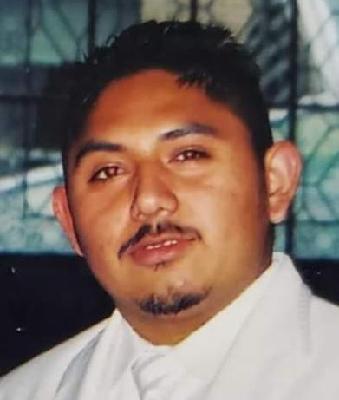
In the cold of January 1985, the life of 18-year-old Cesar Guzman, a young Male, was violently cut short in Oakland, California. His death marked the beginning of a violent, decades-long criminal history for his killer, but for Cesar, it was the tragic end of a life just beginning. Few details about Cesar's personal life have been made public over the years, leaving a void where memories of his personality, dreams, and relationships should be.
What is known is that his path crossed with another 18-year-old, Demorris Andy Hunter, a man who would go on to become a serial killer.
On that fateful day, Hunter, a native of Oakland, shot and killed Cesar. The specific circumstances of their encounter and the motive behind the shooting are not well-documented in public records. The immediate aftermath of Cesar's murder did not lead to the swift and permanent incarceration of his killer. While Hunter was held accountable for this crime, the justice system's response at the time would prove tragically insufficient.
The investigation into Cesar's death was part of a series of violent acts committed by Hunter. The month after he killed Cesar, Hunter shot two other men, Eric Wright and Adolphus Williams, in separate incidents. Wright was paralyzed from the shooting and died from his injuries in 1986. For the murder of Cesar Guzman and the two shootings, Demorris Hunter was convicted and sentenced to 24 years in prison. This sentence, however, was not the end of his story.
In a turn of events that would have devastating consequences, Hunter was released on parole in 1997, having served only a portion of his sentence. Free once more, he resumed his violent path. In March 2002, five years after his release, Hunter murdered again. In Oakland, he shot and killed 41-year-old Ivora Huntley after she intervened in a domestic dispute. Hunter then fled California, becoming a fugitive.
His flight from justice led him to Orlando, Florida, where he adopted the alias Michael Berry. There, in May 2002, he murdered 38-year-old Theresa Ann Green. He strangled her and left her body in the trunk of her car. Hunter was eventually apprehended in Houston, Texas, and extradited back to California to face charges for Ivora Huntley's murder.
In 2005, for the murder of Ivora Huntley, Hunter was sentenced to 110 years to life in prison. The mother of his victim expressed her wish that he face the death penalty for the damage he had caused to so many lives. Following this conviction, the state of Florida sought his extradition to answer for the murder of Theresa Green. After a lengthy delay, he was sent to Florida in 2015.
The final chapter of Demorris Hunter's legal battles began in April 2026, when he stood trial in Florida. He was found guilty of first-degree murder. The jury unanimously recommended the death penalty, and in August 2026, a judge imposed the sentence, telling Hunter, "you have not only forfeited your right to dwell among us as a free man, but by your actions and under the law of the State of Florida, you have forfeited your right to live." Hunter's convictions ultimately included voluntary manslaughter, two counts of attempted murder, and two counts of first-degree murder, resulting in sentences of life imprisonment without parole and death.
While justice for Demorris Hunter's later victims has been delivered in a courtroom, the story of his first known victim, Cesar Guzman, remains a quiet tragedy. His death in 1985 was a harbinger of the violence Hunter would continue to inflict for years, a cycle made possible by a justice system that initially released a killer back into the world. Cesar's name is forever linked to the start of a serial killer's reign, a young life lost before it had the chance to fully unfold.