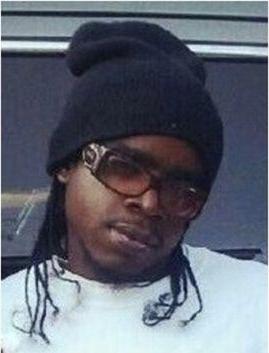
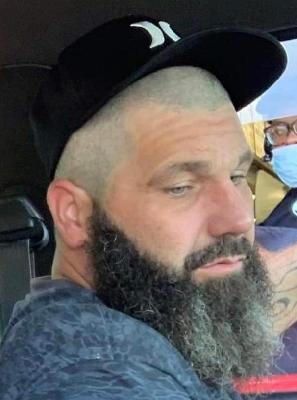
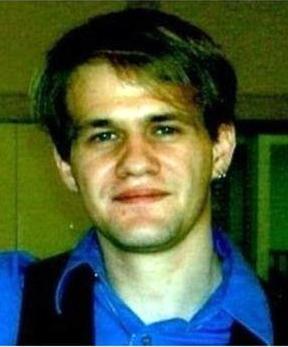
In the spring of 2009, Harvey Gray Watson Jr., a 63-year-old Male inmate within the Virginia prison system, found his life tragically cut short in a place that was supposed to ensure his safety, however diminished by incarceration. His death on May 8, 2009, was not the result of prison violence as it is often imagined, but a calculated act by a man who would become one of Virginia's most infamous serial killers, a man with whom he shared a small cell.
Harvey Watson was serving a 100-year
sentence for a shooting in Lynchburg, Virginia, in 1983, where he killed one person and wounded two others with a 10-gauge shotgun. By 2009, he was known within the prison system to be suffering from mental illness, a condition that manifested in disruptive behavior. In late April of that year, after setting a fire in his cell at Sussex II State Prison, Watson was transferred to Wallens Ridge State Prison, a high-security facility in Big Stone Gap. On May 1, he was assigned to a new cellmate: Robert Charles Gleason, a man already serving a life sentence for a 2007 murder.
The pairing proved to be a fatal one. For seven days, Gleason pleaded with guards and counselors to move Watson out of their 8-by-10-foot cell. He complained about Watson's erratic behavior, which reportedly included singing and screaming nonsensically, drinking his own urine, and other distressing acts. Gleason claimed his cellmate's behavior was driving him to the breaking point, but his requests for a cell change were denied.
On the eighth day, May 8, 2009, Gleason made good on his implied threats. He brutally murdered his cellmate. Harvey Watson was found bound with torn bedsheets, gagged, beaten, and strangled. In a shocking failure of procedure, his body remained in the cell with his killer for approximately 15 hours before being discovered by correctional officers. An internal investigation later revealed that guards had falsified inmate head counts, leading to disciplinary action against two officers and the firing of two others, one of whom was later reinstated.
Robert Gleason immediately confessed to the murder, stating he had done it "cold-bloodedly" and that he planned it. He then began a campaign to receive the death penalty, vowing to kill again if he was not sentenced to death. He told The Associated Press, "Someone needs to stop it. The only way to stop me is to put me on death row." Even as he took responsibility, Gleason acknowledged Watson's vulnerability, stating, "That man, he didn't deserve to die... He needed help." Some of Watson's family members reportedly did not want Gleason to be executed, precisely because it was what he so desperately wanted.
True to his word, while awaiting sentencing for Watson's murder, Gleason killed again. In July 2010, at the supermax Red Onion State Prison, he strangled another inmate, 26-year-old Aaron Cooper, through the wire fencing of their separate recreation cages. Gleason pleaded guilty to both capital murder charges, waived all his appeals, and demanded his own execution. His wish was granted, and on January 16, 2013, Robert Charles Gleason was executed by electric chair, his chosen method of death. He was the last person to be executed by electrocution in Virginia before the state abolished capital punishment.