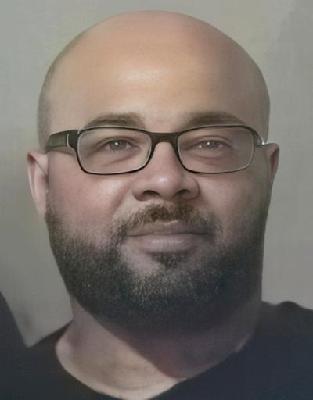
A native of New York, Martin J. Gatto was a 40-year-old man who had built a quiet and respectable life in Lantana, Florida. He worked as a filing clerk in the child support division of the Palm Beach County Clerk of Courts Office. His colleagues knew him as a hardworking and well-regarded employee who was friendly with everyone. His life was cut short in a brutal act of violence that would remain unsolved for more than a decade, leaving those who knew him shocked and searching for answers.
On December 9, 1991, Martin's body was discovered inside his Lantana apartment. He had been stabbed multiple times with a knife. Investigators canvassed the area, speaking with neighbors, but no one reported hearing any arguments or unusual sounds the previous night. With little evidence and no immediate suspects, the case grew cold, one of many unsolved homicides that leave a lasting scar on a community. For years, Martin's murder remained a mystery, a file that detectives would revisit, hoping for a new lead or a breakthrough in technology.
The first significant break in the case came not from Martin's murder, but from another horrific crime that occurred eight months later. On August 22, 1992, in the same town of Lantana, 45-year-old Rita Ann Bado and her 20-year-old daughter, Lisa Ann, were found murdered in their apartment. They had been bound, sexually assaulted, and shot. Like Martin's case, the investigation into the Bado murders initially stalled, overshadowed in the news by the devastation of Hurricane Andrew, which struck South Florida just days later.
The path to justice for all three victims would ultimately be paved by advances in DNA technology. In 2001, investigators identified a potential suspect: James Anthony Frederick, a man with a long criminal history who was already serving time in a Wisconsin prison for armed robbery. Detectives discovered that Frederick had been living in Palm Beach County around the time of the murders. Though he denied any involvement, investigators were persistent.
In May 2003, a DNA match linked Frederick to the scene of the Bado murders. He was charged with two counts of first-degree murder, burglary, kidnapping, and sexual battery. Despite his claims of innocence, he was convicted and sentenced to two consecutive life terms. The connection to Martin Gatto's case came three years later. In October 2006, Frederick's DNA was matched to evidence collected from Martin's apartment fifteen years earlier.
James Anthony Frederick, who also used the aliases David Anthony Fenton, Jay Frederick, David Allen Kirchner, and James Reichard, was a serial killer responsible for at least three deaths. Following the DNA match in Martin's case, Frederick was extradited to Florida. Although he was a known acquaintance of Martin's, he denied ever knowing him or visiting his apartment. Given that he was already serving two life sentences for the Bado murders, plus an additional 97 years for his crimes in Wisconsin, prosecutors did not proceed with a separate trial for the murder of Martin Gatto. James Anthony Frederick will spend the rest of his life in prison, bringing a final, albeit delayed, close to a case that haunted Palm Beach County for years.