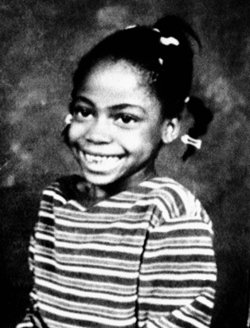
In the spring of 1995, a wave of terror gripped the city of Gary, Indiana, as a serial killer later dubbed "The Gary Strangler" preyed on women. Among his victims was Maxine Walker, a 41-year-old female whose life was violently cut short in May of that year. For months, her disappearance was a mystery, her fate unknown to her loved ones and authorities.
The city, already struggling with a high murder rate, seemed to have swallowed her without a trace, leaving a void of unanswered questions.
Maxine’s case was tragically one of many that year, and it remained cold for months. There were no leads, no witnesses, and no crime scene to investigate. She had simply vanished. It wasn't until the arrest of a 38-year-old man named Eugene Victor Britt in November 1995 for the murder of an 8-year-old girl in nearby Portage that the first thread in Maxine's case began to unravel. Facing intense interrogation, Britt started to talk, and the horrifying scope of his violence came to light.
In an eight-hour confession, Britt admitted to a string of brutal murders he claimed were ordered by voices in his head. He detailed attacking women in desolate areas, strangling and raping them before dumping their bodies. He provided police with a map, pointing out the locations where he had left his victims. Two of these locations held the remains of women whose disappearances had, until that moment, been unsolved. One of them was Maxine Walker.
Following the killer's directions, a police search party combed through a weedy, overgrown field in Gary on December 2, 1995. There, they made the grim discovery of Maxine’s decomposed remains. According to Britt’s chilling account, he had approached Maxine as she was walking. Sensing something was wrong, she was unable to escape before he grabbed her, keeping a hand over her neck to stifle her screams. He dragged her into the secluded, wooded area, where he raped and strangled her.
Eugene Victor Britt, a former convict who had been paroled in 1993 after serving half of a 30-year sentence for a previous rape, had embarked on a killing spree that claimed at least seven lives between May and September 1995. His victims ranged in age from eight to 51. His confession brought a horrifying clarity to a series of deaths that had baffled investigators, some of which had not even been ruled homicides due to the state of decomposition.
In October 2006, Britt pleaded guilty but mentally ill to the murders of Maxine Walker and two other victims, as well as the rape of a 13-year-old girl. A judge had previously ruled that Britt was intellectually disabled, making him ineligible for the death penalty. At his sentencing, Britt, who was confined to a wheelchair after a failed suicide attempt where he threw himself in front of a train, expressed remorse. "I'm truly sorry for my sins and I take full responsibility for my actions," he said, weeping. The judge sentenced him to life imprisonment without the possibility of parole, plus an additional 345 years, ensuring he would die in prison.
While justice was served, the legal proceedings offered little personal insight into the life of Maxine Walker. Her story is tragically defined by its brutal end and its place within the timeline of a serial killer's rampage. Unlike some of Britt's other victims, whose families spoke out in court, Maxine's voice and the memories of those who loved her remain absent from the public record of the case. Her absence underscores the profound and often silent toll of such senseless violence. Today, Eugene Britt remains incarcerated at the Indiana State Prison, while the memory of Maxine Walker is left to be honored by a community that will never forget the terrible summer of 1995.