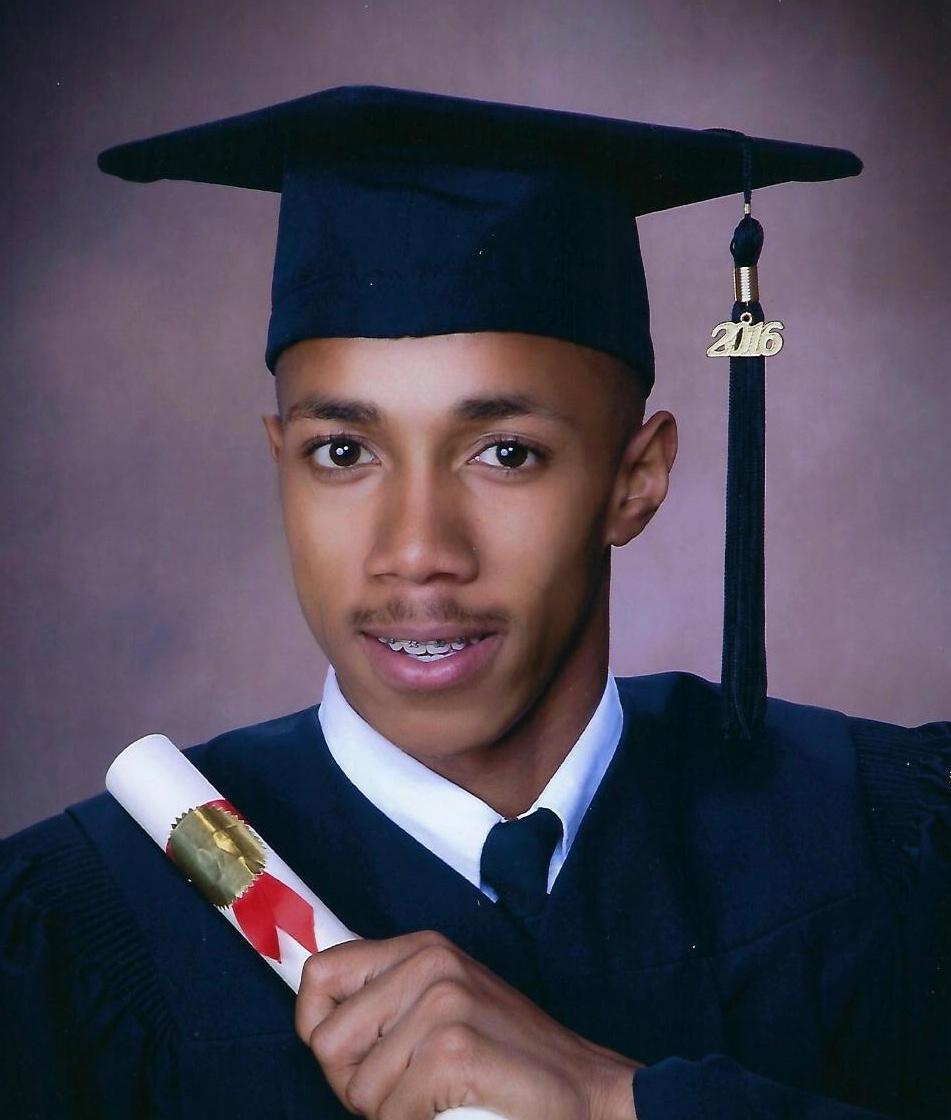
On a summer evening in Washington, D.C., 18-year-old Robert Ward was walking near the intersection of 16th Street and Massachusetts Avenue SE when his life was violently cut short. It was August 4, 1997, and the teenager, a resident of Bay Street SE, was ambushed by an acquaintance. The attack was not random; it was the culmination of a "beef" that had started a year earlier. Armed with a 9mm semiautomatic pistol, the assailant chased Robert into the street and shot him repeatedly at close range.
The killer, Patrick Franklin Andrews, then 17 years old, stood over Robert's body and continued to fire until his weapon was empty. Witnesses to the horrific event would later testify to the chilling scene. Robert was rushed to D.C. General Hospital, but his injuries were too severe, and he was pronounced dead shortly after arriving.
In the immediate aftermath, police had no motive and no suspects, leaving a community shaken and a family devastated by the sudden loss of a young man just on the cusp of adulthood.
For several years, the case of who killed Robert Ward remained unsolved. But investigators continued their work, and eventually, they identified Patrick F. Andrews as the primary suspect. The path to justice was not straightforward. Andrews's first trial for Robert's murder ended in a hung jury. However, the U.S. Attorney's office persisted, and in a second trial, the prosecution successfully presented its case. On June 12, 2002, a D.C. Superior Court jury found Andrews, then 21, guilty of first-degree murder while armed and related gun-possession charges.
The conviction brought a measure of resolution, confirming the identity of the man responsible for the brutal slaying. In September 2002, Andrews was sentenced to a term of 36 years and eight months to life in prison for Robert's murder. This, however, was not the end of Andrews's violent trajectory. He was a serial killer, responsible for at least two other homicides between 1997 and 2007.
While serving his sentence, Andrews's capacity for violence did not diminish. On July 2, 2000, three years after killing Robert, Andrews and an accomplice, Randall C. Mack, shot and killed a man named Deyon Rivers over a dispute involving a friend. Then, on October 7, 2007, while incarcerated at the U.S. Penitentiary in Hazelton, West Virginia, Andrews and another inmate, Kevin Bellinger, ambushed and stabbed fellow prisoner Jesse Harris to death with homemade knives. Harris, who was unarmed, had known both his attackers from their time in Washington, D.C.
For his continued campaign of violence, the legal system imposed its strictest penalties. Following the murder of Jesse Harris, federal prosecutors sought further charges. To avoid a potential death sentence, Andrews pleaded guilty on April 13, 2015, to murder by a federal prisoner serving a life sentence and second-degree murder in a federal facility. This resulted in a sentence of life imprisonment without the possibility of parole, ensuring he would never again be free. His convictions included two counts of first-degree murder while armed, multiple firearms offenses, and murder by a federal prisoner.
Today, Patrick Franklin Andrews remains incarcerated, serving a life sentence in a federal penitentiary. His violent spree cut short the lives of three men, the first of whom was Robert Ward, a teenager whose future was stolen over a petty dispute. While the legal chapter of this case is closed, the human cost remains, a permanent reminder of the senseless violence that occurred on that summer evening in the nation's capital.