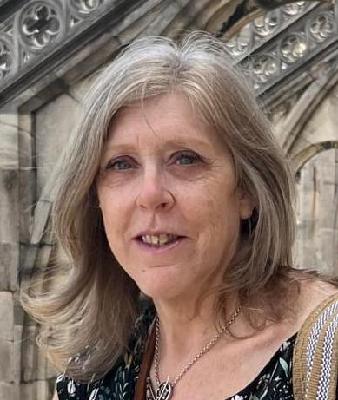
Maribel Fresses, a 27-year-old female described by her father as a "beautiful girl, a loving girl, always daddy's girl," was reported missing from Philadelphia, Pennsylvania, in February 2018. Known as "Bella" to her family, she grew up in Holland, Bucks County. Her life took a difficult turn in high school when she began to struggle with opioid addiction. Despite her challenges, she remained in close contact with her family.
Her father, Ricardo Fresses, recalled that she called him every single day. The sudden silence was immediate and alarming. "Absolutely every day she called me, and one day she stopped calling me," he said. "And as the years went by I knew she was gone." The last time he saw his daughter was on June 19, 2018, when they met for pizza in Kensington and he gave her $50. After she vanished, he would often drive through Kensington in the middle of the night, searching the faces of women on the streets, hoping to find his Bella.
The devastating answer to Maribel's disappearance began to surface in the summer of 2026, years after her family last heard from her. The investigation did not start with her case, but with a chance encounter near Independence Mall on June 19, 2026. A park ranger stopped a man named Eugene Horsch, whose passenger was carrying a fake ID belonging to another missing woman, Blair Tonzelli. This traffic stop led investigators to a three-story home at 417 West Chew Avenue in the Olney neighborhood, a property Eugene shared with his father, Raymond Charles Horsch, until the elder Horsch's death in 2025. What they uncovered inside was a house of horrors that would be linked to at least seven missing women.
Inside the home, police executed over 95 search warrants, discovering a massive and disturbing collection of digital media. They recovered more than 50 hard drives containing over 600,000 images, 70,000 videos, and 10,000 pages of writings. On the very first hard drive they examined, detectives made a grim discovery related to Maribel Fresses and another missing woman, Gabrielle Amarando. They found videos that showed both women alive inside the house, followed by what police described as "graphic and dark" images and videos that appeared to show them deceased. Though the footage did not show how they died, the Philadelphia Medical Examiner's Office reviewed the evidence and determined the women were dead, assuming the images were unaltered.
The man at the center of this sprawling investigation was Raymond Charles Horsch, also known as "R.C." Horsch. He died in May 2025 before he could be charged, but law enforcement sources now consider him a suspected serial killer. Horsch, a pornographic filmmaker and writer, had a long and varied criminal history, with convictions for counterfeiting, methamphetamine manufacturing, cannabis cultivation, and attempted luring of a minor. He preyed on vulnerable women, many of whom struggled with addiction. In his own self-published writings, including a book titled "The Memoir of an Empathetic Serial Killer," he disturbingly claimed to have murdered a woman by strangulation and disposed of her body through a chemical process.
The investigation into Horsch's home revealed a home laboratory with containers of unknown oily substances and chemicals, leading police to seek evidence that he may have chemically destroyed human remains. While no bodies, including Maribel's, have ever been recovered from the property, the digital evidence was damning. In addition to the images of Maribel and Gabrielle, police found a video that allegedly shows Horsch strangling another missing woman, Nicole Fusaro, with a zip tie. In total, investigators have linked Horsch's home to seven women: five who are feared dead and two who remain missing, including his ex-wife, Amy McHale.
For Maribel's family, the news confirmed their deepest fears. Her sister, Melissa Fresses, expressed her devastation, stating the news felt unreal. Her father, Ricardo, said that in his gut, he had known his daughter was gone for years. The discovery of the horrific evidence provided a painful answer but no closure, as Maribel's body has not been found. Raymond Horsch died before he could face justice for the string of disappearances and suspected murders connected to his Olney home. The case is considered solved, with the primary suspect deceased, leaving behind a legacy of pain and unanswered questions for the families of Maribel Fresses and the many other women whose lives tragically intersected with his.