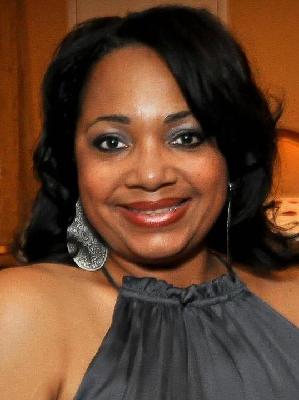
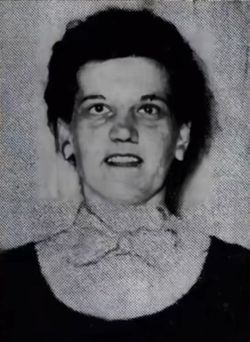
In the spring of 1983, a woman named Eleanor Williams was brutally killed in Annapolis, Maryland. Her life was cut short in a secluded, wooded area where her body was later discovered. An autopsy would reveal that she had been bludgeoned and stabbed to death. For three years, the investigation into her violent end carried on, a painful and unanswered question for anyone who knew and loved her. The full story of the injustice that began with her death would take nearly four decades to unfold, revealing a series of systemic failures that allowed a killer to walk free and take more lives.
The first break in the case came in 1986 when a man named Reginald Lively pleaded guilty to the second-degree murder of Eleanor. For his crime, Lively was given a 20-year prison sentence. In a turn of events that would later be described as a tragic failure of the justice system, he served only eight years of that sentence before being released.
Free again, Lively left a trail of violence that would stretch across states and decades, leaving more victims and grieving families in his wake.
After his release for Eleanor’s murder, Lively moved to North Carolina. In 2000, he committed another murder, pleading guilty to the second-degree murder of a woman named Willy Mae Arrington. This time he was sentenced to 30 years in prison, but once again, he was granted parole after serving just 12 years. He was let out of prison and allowed to move back to Maryland, where he settled into an apartment building in Northwest Baltimore.
The final chapter of Reginald Lively's violent history was written on May 28, 2021. On that morning, police were called to his apartment building where a 68-year-old resident named John Hall III was found dead. Hall had been bludgeoned with a wrench and stabbed 88 times. The investigation revealed that Hall had recently won $1,000 at a casino, and the money was missing from his apartment. Suspicion quickly fell on Lively, who lived in the same building and had been previously accused by Hall of stealing from him.
Security footage from the apartment building captured Lively's movements on the morning of the murder. He was seen on video leaving the area of Hall's apartment carrying a plastic bag with a weighted, reddish-colored object inside. DNA evidence also placed Lively inside Hall's apartment. Though he initially denied involvement, he could not explain the evidence stacked against him. The investigation into Hall's death brought new scrutiny to Lively's past, connecting the dots between the three separate murders he had committed over 38 years.
In 2025, Reginald Lively was convicted of the first-degree murder of John Hall and sentenced to life in prison without the possibility of parole. Prosecutors labeled him a "serial killer" who should never have been freed. "This violent offender should never have been allowed to walk free," said Baltimore City State's Attorney Ivan Bates after the sentencing. "No longer will repeat violent offenders serve a few years only to be released and terrorize our communities again." For the families of his victims, the final conviction brought a measure of justice, but it also highlighted the devastating consequences of a system that had twice failed to keep a dangerous man behind bars, a failure that began with the murder of Eleanor Williams.