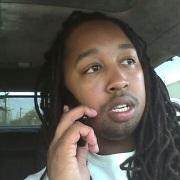
On the night of September 22, 2026, a confrontation between two motorists in Berkeley, Missouri, ended in tragedy when Vance Bennett Townes, a 59-year-old White/Caucasian man and longtime musician in the St. Louis area, was fatally shot during what police described as a road-rage incident. The shooting occurred around 11:30 p.m. in the parking lot of A-1 Liquor near the intersection of North Hanley Road and Frost Avenue in northern St. Louis County.
What began as an encounter between two strangers on the road escalated into a deadly confrontation involving firearms, leaving Townes dead at the scene.
According to Berkeley police, the incident began as Townes and another motorist traveled westbound along Frost Avenue. The other driver, identified by authorities as a 30-year-old man operating a Honda, was traveling slowly because he mistakenly believed a police vehicle was behind him. Investigators said the driver had a woman and two children in his vehicle and that the family had been driving around in an effort to help the children fall asleep. Townes reportedly became frustrated with the Honda driver's slow speed, eventually passing the vehicle while honking his horn and yelling. The confrontation continued when both motorists entered a nearby parking lot.
Police reported that the disagreement escalated after both men displayed handguns. During the encounter, the younger driver fired five shots from inside his Honda, striking Townes. Although investigators recovered firearms belonging to both individuals, police determined that only the Honda driver discharged his weapon. Townes suffered fatal gunshot injuries and was pronounced dead at the scene. The two men were not believed to have known one another before the confrontation.
Berkeley police immediately began investigating the circumstances surrounding the shooting, with particular attention to determining which man displayed or threatened to use a firearm first. Investigators recovered both weapons, interviewed two witnesses and obtained surveillance recordings from several nearby cameras, including footage from a camera positioned directly above the location where the shooting occurred. Authorities believed this evidence would be crucial in reconstructing the encounter and establishing whether the use of deadly force constituted criminal conduct or legally justified self-defense.
The surviving driver was taken into police custody following the shooting and reportedly cooperated with investigators. Berkeley Police Major Steve Runge, who subsequently served as acting police chief, stated that the man had no prior criminal history. Investigators were particularly concerned with establishing the sequence of events immediately preceding the gunfire, including whether either individual pointed a weapon at the other and whether the surviving driver reasonably believed his life or the lives of his passengers were in danger. Because both motorists possessed firearms, authorities emphasized that the circumstances of the confrontation would play a significant role in determining whether criminal charges were appropriate.
On September 30, 2026, Berkeley police met with representatives of the St. Louis County Prosecuting Attorney's Office to discuss the evidence and evaluate possible charges. Following that meeting, Runge announced that prosecutors would not file criminal charges at that time and that the investigation remained under review. He emphasized that charges could still be filed if additional evidence justified prosecution. The surviving driver's identity was not publicly disclosed in the available reports. As of October 22, 2026, no subsequent arrest on criminal charges, prosecution, trial or conviction connected to Townes' death could be confirmed through publicly available reporting.
Beyond the circumstances of his death, Townes was remembered as a talented singer, guitarist and songwriter who had spent decades performing in the St. Louis music community. Born on February 24, 1967, he grew up in Maryland Heights, Missouri, and graduated from Pattonville High School in 1985. After studying music in college, he began performing professionally in his twenties and developed a lifelong dedication to songwriting and live performances. He was a member of the local band BADD TATTOO and had recently released his first solo track, titled "SOUL," on Spotify. At the time of his death, he was working on an album that included a song dedicated to his grandson, Owen, titled "The Melody of Owen."
Family members described Townes as a generous, compassionate individual who placed tremendous importance on the people he loved. He was survived by his wife, Bunny, his daughters, Amanda and Caitlin, his grandson, and numerous other relatives and friends. His death brought additional hardship to his family because Bunny was undergoing cancer treatment while confronting the sudden loss of her husband. Relatives established a fundraising campaign to assist with funeral expenses, medical costs and everyday financial needs during her treatment and grieving process.
A visitation and funeral service were held on October 1, 2026, at Paul Funeral Home in St. Charles, Missouri, where loved ones had an opportunity to honor his memory. Friends, relatives and fellow musicians remembered a man whose passion for music was matched by his devotion to his family and his willingness to help others. His death deeply affected those who knew him, particularly because the confrontation arose from an ordinary encounter between motorists who reportedly had no previous connection.
The investigation into Townes' death has centered on determining whether the shooting was an act of unlawful violence or a legally justified response to an immediate threat. Although authorities identified the individual responsible for firing the fatal shots, the decision not to pursue charges as of September 30 left unresolved questions surrounding the encounter. For Townes' family, the tragedy represents far more than a disputed sequence of events in a parking lot. It marked the sudden loss of a husband, father, grandfather and musician whose life was cut short during a confrontation that began over the speed of a vehicle on a roadway.