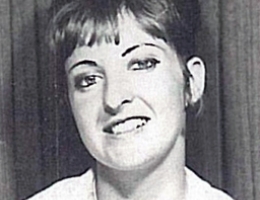
Ruth Ernesta Keating was a 91-year-old white woman who resided at 2156 Princeton Avenue in the hilly, close-knit neighborhood of Echo Park in Los Angeles. Living in a residential pocket known for its quiet streets and longtime residents, Keating relied on daily assistance and lived alongside her son, who served as her primary live-in caretaker during the final chapter of her long life.
By the late summer of 2007, Keating's health had severely deteriorated. On August 2, 2007, her son brought her in for medical treatment at the Los Angeles Medical Center. Medical staff examining the elderly woman observed alarming signs of severe physical distress and neglect, prompting physicians to file a report alerting authorities. Following her hospital visit, Keating was transferred to Brier Oak Terrace Care Center, a nursing and rehabilitation facility situated at 5154 Sunset Boulevard in Los Angeles.
Despite receiving professional care at the facility, Keating's weakened system could not overcome the extreme medical complications she had accumulated. She passed away at Brier Oak Terrace on Sunday, August 19, 2007, roughly one week after being admitted. An autopsy performed by the Los Angeles County Department of Medical Examiner-Coroner concluded that Keating died from a combination of sepsis, a severe bone infection, extensive bedsores, hypertension, and malnutrition.
Coroner's office spokesman Ed Winter noted that Keating's severe physical conditions pre-dated her brief, week-long stay at the Sunset Boulevard nursing center, pointing back to the months and weeks she spent at her home on Princeton Avenue. As a result of the extreme degree of neglect and malnutrition that directly contributed to her death, the coroner officially classified Keating's death as a homicide.
Detectives with the Los Angeles Police Department, including Detective T.J. Morris, initiated an inquiry to determine whether criminal neglect or elder abuse had taken place. Investigators sought out Keating's treating physician as well as neighbors living along Princeton Avenue to understand her living conditions and medical history. According to Detective Morris, those initial interviews yielded no definitive evidence of elder abuse, complicating the legal question of accountability. As of early 2009, police were still reviewing the case file to determine whether charges for criminal homicide could be substantiated. No arrests were made, and no criminal charges were brought before the district attorney.
Keating was one of roughly four hundred homicide victims recorded in the city of Los Angeles in 2007, a year marked by high numbers of violent deaths across the county, though her case stood apart as a rare, complex investigation into elder neglect and caretaker responsibility. Decades after her passing, the circumstances that allowed a nonagenarian woman to decline into lethal malnutrition and infection under home care remain legally unresolved, and the case remains open in Los Angeles records without a criminal resolution.