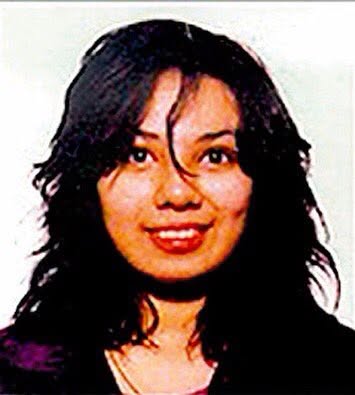
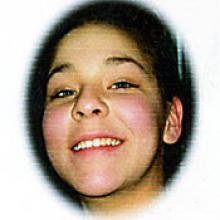
Tina Fontaine, a 15-year-old Indigenous girl from Sagkeeng First Nation, came to Winnipeg in the summer of 2014 for what was originally expected to be a short visit with her mother. Instead of returning home, Tina became increasingly disconnected from the relatives who had raised her and came into contact with Winnipeg’s child-welfare system. During the final weeks of her life, she repeatedly went missing from placements, struggled with substance use, and was considered vulnerable to
exploitation by adults. The Manitoba Advocate for Children and Youth later concluded that by the time of her final disappearance, authorities had ample evidence that she was in serious and immediate danger.
The last confirmed day Tina was seen alive was August 8, 2014. Early that morning, police stopped a truck in which she was a passenger. Although she eventually gave officers her real name, they failed to recognize that she had been reported missing and allowed her to leave. Several hours later she was found unconscious near the University of Winnipeg. Paramedics revived her and transported her to the Health Sciences Centre, where concerns were raised about possible exploitation and substance use. After her discharge, a social worker arranged an emergency placement for her in a downtown hotel, but Tina left the placement and disappeared again.
Nine days later, on August 17, Tina’s body was recovered from the Red River near Winnipeg’s Alexander Docks. She had been wrapped inside a duvet cover that was tied shut and weighted with approximately 11.5 kilograms, or about 25 pounds, of rocks. The circumstances immediately made investigators suspicious that her body had deliberately been concealed and placed in the river. The medical examiner could not establish an exact date or cause of death because decomposition and immersion in the water had destroyed or obscured potential evidence. The pathologist found no major traumatic injuries and ruled out several potential causes, including stabbing, major blunt-force trauma and strangulation. Drowning or smothering could not be excluded, but neither could be established as the cause. The pathologist estimated that Tina could have died anywhere from roughly two to nine days before her body was recovered.
Investigators eventually concentrated heavily on Raymond Joseph Cormier, a much older man whom Tina had met in Winnipeg during the summer. Tina and her boyfriend had encountered Cormier on a North End street, and witnesses testified that the pair subsequently spent time around him. Cormier sometimes used the name “Sebastian.” On August 6, two days before Tina was last confirmed alive, witnesses described an argument between Tina and Cormier. That night, Tina called 911 and reported that a friend she called Sebastian had stolen a blue truck. Evidence at Cormier’s later trial showed that Tina had also spoken to a social worker about Sebastian shortly before she disappeared.
Cormier came under suspicion relatively early in the homicide investigation. Police first arrested and questioned him on October 1, 2014, although he was not charged with Tina’s death at that time. Investigators subsequently conducted an extensive undercover investigation known as Project Styx. Beginning in 2015, police placed listening devices in Cormier’s apartment and used undercover officers while recording thousands of conversations in an attempt to obtain evidence about Tina’s death. Prosecutors later relied heavily on portions of those recordings in which Cormier discussed Tina, her age, sexual activity and what had happened to her. Cormier repeatedly denied killing her, and his lawyers maintained that statements selected by prosecutors were ambiguous and were not a confession.
Winnipeg homicide investigators arrested Cormier in Vancouver on December 9, 2015, and he was charged with second-degree murder. Police said they believed he had encountered Tina several times and killed her during their final encounter. By the time the case reached trial, however, prosecutors faced a significant evidentiary problem: there was no eyewitness to the killing, no established cause of death and no DNA or other forensic evidence connecting Cormier to Tina’s body. Investigators believed the duvet cover used to conceal her was similar to one Cormier had owned, but forensic examinations did not establish that it belonged to him. Testing also failed to find his DNA on the duvet or on a vehicle prosecutors believed might have been relevant to the disposal of the body.
Cormier’s second-degree murder trial began in Winnipeg on January 29, 2018. The prosecution presented a circumstantial case involving Tina’s known association with Cormier, testimony about their encounters and argument, the duvet cover, statements from people who knew Cormier and recordings gathered during the undercover investigation. Prosecutors argued that some of Cormier’s recorded remarks amounted to incriminating admissions and theorized that Tina might have been killed because Cormier feared consequences connected to her age. The defence challenged those interpretations and emphasized the absence of physical evidence, the unknown cause of death and Cormier’s repeated denials. Cormier pleaded not guilty and did not testify.
On February 22, 2018, after hearing nearly 50 witnesses and deliberating for approximately 11 hours, the jury found Raymond Cormier not guilty of second-degree murder. The acquittal meant the prosecution had not proved beyond a reasonable doubt that he killed Tina. Manitoba prosecutors subsequently reviewed the case and announced in March 2018 that they would not appeal because they concluded there was no viable error of law on which a successful Crown appeal could be based. No one has been convicted in connection with Tina’s death.
Cormier died on April 3, 2024. Authorities in Ontario described his death as non-suspicious. His death did not change the legal outcome of the case: he had been acquitted and remained legally not guilty of the charge brought against him. Reporting following his death indicated that Tina’s case remained open, with investigators still able to receive and pursue new information. No other person has publicly been charged or convicted in her death, leaving the circumstances of how she died and who was responsible unresolved.