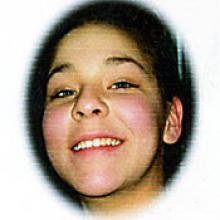
Glenda Morrisseau was a 19-year-old Indigenous woman from Sagkeeng First Nation who was living with her mother and stepfather in Winnipeg and attending R.B. Russell School. In the early morning hours of July 17, 1991, she had been at the Stock Exchange Hotel and was last seen at about 2:30 a.m. on Logan Avenue, apparently looking for a ride downtown. Investigators came to believe that she entered an older-model, full-sized, dark-coloured station wagon driven by a middle-aged man.
The vehicle was later described as possibly having light-yellow seat covers. When Glenda failed to return home, her sister reported her missing several days later.
The search continued for several weeks without finding her. On August 7, an employee at an industrial property in St. Boniface discovered Glenda's body near the end of Youville Street, close to the Seine River and approximately five kilometres from where she had last been seen. Her remains had been concealed among large wooden beams and poles in a field used by a local company to store heavy equipment. She was partially unclothed, and later accounts reported that her hands had been bound behind her back. Her pants and underwear were missing from the scene. The condition of her remains indicated that she had been there for some time before being discovered.
Glenda had suffered devastating injuries to her face and head, including fractured cheekbones, a broken jaw and a fractured eye socket. Because of decomposition, establishing an exact cause and time of death was difficult, but investigators believed she died from massive blunt-force trauma to the head, apparently inflicted with a large blunt object. Authorities believed she was probably killed on or about July 17, shortly after she was last seen, rather than on August 7, which was the date her body was found.
Investigators considered the possibility that the assault and killing occurred somewhere other than the place where Glenda was found. The absence of her lower clothing and the manner in which her body had been left supported a theory that she may have been killed inside a vehicle and then transported to the St. Boniface industrial site to delay discovery. Investigators also considered a sexual motive possible. They believed that the vehicle used to transport her might once have contained blood evidence, including possible traces in the light-yellow seat covers associated with the station wagon description. Because the disposal site was tucked into an industrial area at the end of Youville Street, investigators also believed the killer may have been familiar with the St. Boniface area.
The middle-aged man associated with the dark station wagon became one of the most important unidentified figures in the investigation, but publicly available accounts do not identify him by name or show that police ever established his identity. The lengthy period between Glenda's disappearance and the discovery of her body complicated the investigation and reduced investigators' ability to recover evidence that might have led directly to her killer. Despite the vehicle description and the circumstances surrounding her final known movements, the case did not produce an arrest.
In 2010, another possibility briefly attracted public attention after Canadian Forces officer Russell Williams was arrested in Ontario for unrelated murders and sexual offences. Williams had been stationed as a flight instructor in Portage la Prairie during the period when Glenda was killed, prompting members of her family to wonder publicly whether his presence in Manitoba warranted examination. Contemporary reporting, however, did not establish Williams as a suspect in Glenda's homicide or disclose evidence connecting him to her death. No charge against him was ever brought in connection with her case.
Glenda's homicide later became one of the cases assigned to Project Devote, a joint investigative effort involving Manitoba RCMP and Winnipeg police that reviewed numerous unresolved disappearances and killings. Her name appeared among 28 victims whose cases were placed under the task force's responsibility. Even with renewed investigative attention and continuing appeals for information, no arrest, criminal charge, trial or conviction has been publicly reported in Glenda's killing.
Her family continued seeking answers for decades. During testimony before Canada's National Inquiry into Missing and Murdered Indigenous Women and Girls in 2017, Earl Morrisseau described Glenda as quiet but increasingly outgoing as she entered adulthood, someone who was laughing and talking more and beginning to come into her own before she suddenly disappeared. The loss deeply affected those around her, and the family was left without the resolution of seeing anyone brought before a court for the crime.
As recently as 2026, published reporting continued to describe Glenda Morrisseau's murder as unsolved. No publicly identified killer has been charged, and there has been no trial or conviction in connection with her death. The circumstances surrounding the dark station wagon and the middle-aged man believed to have been driving it remain central unanswered questions in a homicide that has remained unresolved for more than three decades.