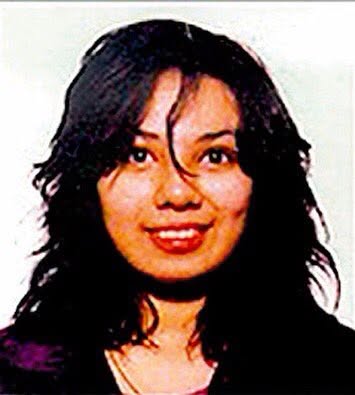
Fonassa Lynn Louise Bruyere, a 17-year-old First Nations girl from Sagkeeng First Nation, was remembered by her family as funny, affectionate and deeply connected to the people she loved. She enjoyed singing, writing poems and spending time with her grandmother, who had helped raise her. Her spirit name was Walking with Bears. As she entered her teenage years, however, her life became increasingly unstable.
She spent periods in foster care and group homes, struggled with addiction and was sexually exploited on Winnipeg streets. Her family remained worried about her safety and said she continued to stay in contact with them even during difficult periods of her life. :chatgpt-content-reference
In the early morning hours of August 9, 2007, Fonassa was with her sister near Aikins Street and Selkirk Avenue in Winnipeg's North End. Her sister later recalled seeing a green two-door pickup truck with tinted windows repeatedly circling them before stopping. At about 6 a.m., Fonassa climbed into the truck with an unfamiliar man. Her sister described the driver as having short hair, a moustache and a prominent nose. The truck quickly drove away. Fonassa's sister expected her to return within roughly 20 or 30 minutes, but she never did. August 9 was the date Fonassa was last seen alive; available reporting does not establish it as her exact date of death. :chatgpt-content-reference
When Fonassa failed to return or contact anyone, her family became alarmed because disappearing completely was out of character for her. Relatives later said they tried repeatedly to report her missing but believed their concerns were dismissed because she had previously run away, used drugs and lived on the street. With help from Child Find Manitoba, family members made missing-person posters and searched areas she was known to frequent. They walked through neighborhoods, knocked on doors and checked drug houses, desperately hoping someone had seen her. :chatgpt-content-reference
Their search ended tragically on August 30, 2007, when Fonassa's remains were discovered in a field near Ritchie Street and Mollard Road on the northwestern edge of Winnipeg. Police classified the death as a homicide, but investigators did not publicly release her official cause of death. Fonassa's family has said they were told she had been stabbed 17 times and sexually assaulted. Relatives also said they were told she had DNA beneath her fingernails and hair clutched between her fingers, circumstances they believed showed she had fought her attacker. Those specific forensic details have been reported as information provided by the family rather than publicly released police findings. :chatgpt-content-reference
Investigators examined people in Fonassa's circle and the environments in which she had been exploited. Her sister described a Burrows Avenue residence where several older men allegedly supplied teenage girls with crack cocaine and where some of the girls exchanged sex for drugs. The family also said at least one man involved in sexually exploiting women had previously threatened Fonassa and members of her family. By 2009, Sagkeeng leadership said Winnipeg police had indicated they were looking at "persons of interest." Fonassa's grandmother said police had questioned people in connection with the killing but ultimately determined that those individuals should not be charged. No publicly available evidence established that anyone associated with the Burrows Avenue residence was responsible for her death. :chatgpt-content-reference
The unidentified driver of the green pickup remained one of the most significant people sought in connection with Fonassa's final known movements. Investigators and later public appeals continued seeking information about the green two-door truck with tinted windows and the man seen driving it. Despite the detailed description provided by Fonassa's sister, no arrest resulted from that lead. :chatgpt-content-reference
Another possible connection emerged publicly in 2012 after Winnipeg police arrested Shawn Cameron Lamb in connection with the deaths of several other vulnerable women. Fonassa's relatives wrote directly to Lamb asking whether he had killed her. Winnipeg police said at the time that investigators would examine whether Lamb might have been responsible for Fonassa's death, along with other potentially related cases. Lamb later pleaded guilty to manslaughter in the killings of Carolyn Sinclair and Lorna Blacksmith and received a 20-year sentence, but he was never charged in Fonassa's homicide, and no public evidence has established that he killed her. :chatgpt-content-reference
Fonassa's case eventually became one of the investigations assigned to Project Devote, the joint Winnipeg Police Service-RCMP task force created to investigate numerous missing and murdered people in Manitoba. Her killing had already helped intensify calls for a specialized investigation into the deaths and disappearances of vulnerable women and girls. When Winnipeg police withdrew from Project Devote in 2020, Fonassa's file was returned to the Winnipeg Police Service. Police subsequently confirmed that the homicide investigation remained open. :chatgpt-content-reference
Years after the killing, Fonassa's family said they still knew of no identified suspect or meaningful breakthrough. No one has been arrested, charged, tried or convicted for her murder. Public appeals were still describing the case as unsolved in 2026 and continued seeking information about the green truck, its driver and anyone who may know what happened between Fonassa's disappearance on August 9 and the discovery of her body on August 30, 2007. :chatgpt-content-reference