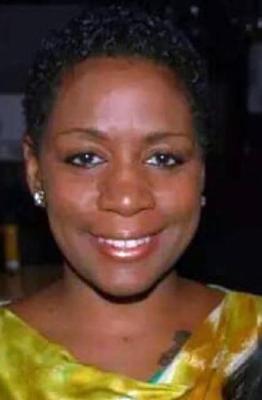
In Jacksonville, Florida, the life of Tyresa Mack, a 24-year-old Black/African American female, was tragically cut short on July 26, 1999. That morning, she had been out with a friend, diligently applying for jobs. The last time anyone heard from her was in a phone call she made around 1:25 p.m. Later that day, concern grew when she failed to pick her children up from daycare and missed a doctor's appointment for her youngest child.
That evening, her sister and stepfather went to her apartment to check on her, where they made a horrifying discovery. Mack was found in her bedroom, strangled with a white cord and nude from the waist down. An autopsy would later confirm she had been sexually assaulted and had died from asphyxia. Investigators noted that her television and a distinctive necklace and bracelet set she always wore were missing from the home.
For years, Tyresa Mack's murder remained unsolved, her family left without answers. The case eventually gained traction when investigators began looking into a series of murders of young women that occurred in Jacksonville between 2002 and 2003. The perpetrator was identified as Paul Durousseau, a former cab driver. As police delved into his background, they found a history of violence against women. The breakthrough in Mack's case came when DNA evidence collected from her body was matched to Durousseau. Witnesses from 1999 also came forward, stating they had seen Durousseau at Mack's apartment on the day of the murder, with one person even witnessing him carrying a television out of the residence. On August 26, 2003, Paul Durousseau was arrested and charged with the first-degree murder of Tyresa Mack. He was eventually linked to the deaths of six other women in Florida and Georgia.
Though suspected of being a serial killer responsible for multiple homicides, the state chose to prosecute Paul Durousseau solely for the murder of Tyresa Mack. During his trial in 2007, prosecutors presented evidence from the other murders to establish his pattern of behavior. Durousseau took the stand in his own defense, admitting he had sex with Mack on the day she died but denying he was the killer. After more than 10 hours of deliberation, the jury found him guilty of first-degree murder. He was subsequently sentenced to death. However, years later, his death sentence was overturned after a change in state law required a unanimous jury recommendation for capital punishment, which had not been the case in his trial. At a resentencing hearing in December 2021, a new jury again failed to reach a unanimous decision for the death penalty. As a result, Paul Durousseau was sentenced to life in prison without the possibility of parole. The case of Tyresa Mack's death was a tragic story that ultimately led to the capture of a serial killer who preyed on young women for years, with justice for Mack's family finally coming in the form of a life sentence for her murderer.