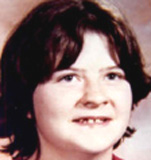
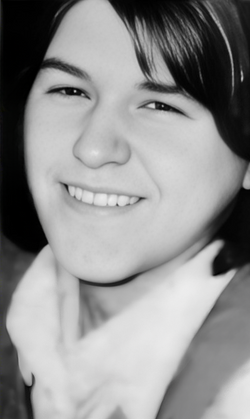
Brenda Carol Ball, a 22-year-old Caucasian female, was known by friends for her free and fun-loving spirit. In the spring of 1974, she was at a point of transition, having recently dropped out of classes at Highline Community College and was living with roommates in a suburb of Seattle, Washington. On the night of May 31, she went by herself to the Flame Tavern, a local bar in Burien.
She stayed until the early morning hours of June 1, and after the tavern closed, she asked a musician for a ride, but he was headed in the opposite direction. Brenda was last seen in the parking lot talking with a man who had his arm in a sling. After that encounter, she vanished.
Because Brenda was known to sometimes take off on whims for a few days, her friends and family were not immediately alarmed by her absence. It wasn't until nearly three weeks had passed with no word from her that she was officially reported as a missing person. Initially, law enforcement did not connect her case to the string of disappearances of young college women that had been plaguing the region. Brenda was slightly older than the other missing women, and she had disappeared from a tavern, not a college campus, which seemed to set her case apart. The investigation into her disappearance yielded few leads for months, leaving her fate a mystery.
The tragic truth began to surface on March 1, 1975, when forestry students discovered a human skull in a remote, wooded area on Taylor Mountain. Two days later, the remains were identified as those of Brenda Carol Ball. The skull had suffered significant blunt force trauma, indicating a violent death. As investigators searched the area, the remains of other missing women were also found, turning the mountainside into a grisly burial ground. The discovery confirmed that Brenda was a victim of the same predator who was hunting young women in the area, a man witnesses in other cases had described as "Ted," who often wore a sling or used crutches as a ruse.
The man was eventually identified as Theodore "Ted" Bundy, who was first arrested in 1975. Before his execution in Florida on January 24, 1989, Bundy confessed to Brenda's murder. He provided an account of the night, claiming he offered her a ride and took her back to his Seattle rooming house. He alleged they had a "more or less" consensual sexual encounter and that he strangled her after she had fallen asleep. However, Bundy's confession was inconsistent with the evidence; his story of strangulation did not explain the severe fractures found on Brenda's skull, a detail suggesting she was beaten with a heavy object like a crowbar, a common tool he used in his attacks. Her body, apart from her skull, was never recovered.