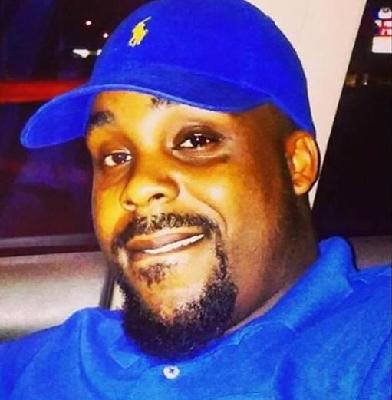
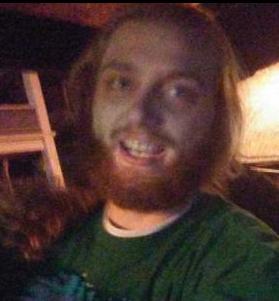
On November 16, 2025, in Cleveland, Ohio, 24-year-old man Dominic W. Rice was shot and killed in a burst of gunfire on the city’s East Side, an attack that also left a woman wounded and turned an ordinary night into a scene of emergency lights and hurried voices. The brief lines that mark his death in public records say little: a name, an age, a city, a note that he was “lost to gun violence,” and a headline from local news identifying him as the man killed when shots rang out and a woman
was injured nearby. Behind those sparse details lies the image of a neighborhood jolted awake, residents stepping to windows or doors at the sound of sirens, wondering which corner or block had just been added to the long tally of places where someone’s life ended suddenly.
In the immediate aftermath, medics and officers would have arrived to find a chaotic scene shaped by the few facts that later made it into the record: a man mortally wounded, a woman hurt badly enough to need hospital care, and an East Side street transformed into a crime scene by strips of yellow tape. The shooting was serious enough to draw coverage from a major local outlet, which framed it starkly as a killing that left one person dead and another wounded, part of an ongoing pattern of violence concentrated in the city’s most burdened neighborhoods. Dominic’s name and the date of the shooting would then pass from the hands of detectives and reporters into databases and memorial pages, where the human story is reduced to a line in a table, a dot on a map, a case number waiting for answers that may come slowly, if at all.
On the National Gun Violence Memorial, his entry is simple but striking: his full name, his age, the date and place of his death, and a quiet reminder that his life is one among many lost in Cleveland to bullets. Twelve virtual candles have been lit there, small points of light left by people who knew him or who simply refuse to let another victim pass without acknowledgment. Each candle suggests someone taking a moment to type his name, to press a button, to leave behind a fragment of grief or solidarity. The page invites visitors to add more—to share a nickname, an occupation, schools attended, memories of personality and dreams—subtle proof that the public record so far has not yet caught up with the fullness of who he was to those who loved him.
Dominic’s killing unfolded in a city that has declared gun violence a public health crisis and that has, paradoxically, seen overall homicides fall even as certain neighborhoods, especially on and around the East Side, continue to absorb a disproportionate share of shootings. In recent years, Cleveland’s leaders and community groups have launched initiatives to reduce violence and invest in safety, yet the data still show that gun deaths concentrate in a handful of historically neglected areas where residents live with the daily reality of shots fired, makeshift memorials, and funerals that come too often. Dominic’s name now sits among those of other victims from Cleveland on citywide memorial lists, a reminder that even in a year when the statistics show progress, individual families are still facing irreparable loss.
Publicly accessible memorials and references to the case provide no detailed narrative of the moments before the gunfire, and they do not identify any suspect or describe an arrest connected to the shooting that took Dominic’s life and injured the woman beside him. In the record that can be seen, his death remains a stark entry: a life cut short on an East Side street, a companion wounded, a community left to piece together what happened from a brief headline and a small online shrine of candles and names.