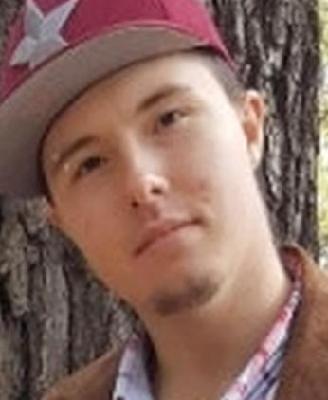
Muridi Hassan Hussein, a 27-year-old man from Mankato, Minnesota, set out on what should have been an ordinary Sunday morning on November 9, 2025, but the day ended with his life cut short by gunfire. Around 9:25 a.m., an encounter on the 400 block of Holly Lane turned violent. Neighbors later told police they heard shots ring out, and investigators would come to believe that Hussein, wounded but still conscious, managed to drive away from the scene in an attempt to save himself.
His vehicle traveled to a parking lot off Star Street near a Dunkin’ and the 1600 block of Madison Avenue, where first responders found him unresponsive inside the car. Despite efforts at the scene, he was pronounced dead there, his final moments spent alone in the driver’s seat after a desperate flight from the gunfire that had just erupted behind him.
Within minutes of the first calls to 911 reporting a shooting in the Holly Lane area, officers from the Mankato Department of Public Safety converged on the neighborhood. They followed a trail that led from the initial crime scene to the parking lot where Hussein’s vehicle had come to rest, reconstructing those last few minutes of frantic driving between the two locations. Inside the vehicle, they discovered he had suffered a gunshot wound to his neck, consistent with the account that multiple shots were fired at close range as he tried to get away. The gravity of the situation drew in additional resources: the Minnesota Bureau of Criminal Apprehension and the Minnesota River Valley Drug Task Force joined local detectives, signaling from the outset that this would be treated as a major homicide investigation. Authorities reassured residents that there was no broader threat to the public, but also made it clear that they urgently needed any surveillance footage or witness accounts from the Holly Lane, Madison Avenue, or Star Street corridors that could help fill gaps in the timeline.
Attention quickly turned to a suspect. Before the day was over, police arrested 23-year-old A’Quan Kaishaid Laurence Thornton of Mankato in connection with Hussein’s death. A firearm believed to have been used in the shooting was recovered, and investigators publicly stated that they believed the individual already in custody was responsible. In the days that followed, prosecutors charged Thornton in Blue Earth County District Court with second-degree murder with intent but without premeditation, a charge that reflects an allegation of purposeful killing that arose quickly out of a volatile situation rather than a long-planned act. Court documents portrayed a fast-escalating confrontation that began with anger and threats and ended with bullets on Holly Lane and a lifeless body discovered in a nearby parking lot.
The charging documents laid out a tangled mix of money, drugs, and personal relationships as the backdrop to the shooting. According to those records, Hussein had been riding in a car with others that morning when he received a video call from Thornton, who allegedly brandished a gun on screen and threatened to shoot him over an unpaid debt connected to THC cartridges. A woman who had been in a relationship with Thornton told police that she had called earlier about someone threatening her and slashing her tires outside her apartment, and that Hussein was her ex-boyfriend. As officers began to respond to her complaint, they also received reports of gunfire in the same general area. Witnesses in Hussein’s vehicle later said they saw Thornton standing along Holly Lane with a weapon; when Hussein tried to maneuver the car with a U-turn, Thornton was said to have opened fire, with three to six shots reported. From there, Hussein fled in the same vehicle, mortally wounded but still in motion, until he could go no farther. Thornton later told police there had been a dispute between them over money and THC products, a detail that prosecutors cited as they argued the shooting grew from a combustible mix of financial grievance and strained personal ties.
While investigators and prosecutors set about building the case inside courtrooms and police offices, the emotional impact of the killing rippled outward through Mankato. News accounts described a community jolted by the loss of someone so young and by the suddenness of the violence playing out in the middle of a quiet Sunday morning. Online memorial pages dedicated to Hussein quickly appeared, with friends, relatives, and strangers lighting virtual candles in his name and marking him as another life lost to gun violence. As those tributes accumulated, authorities continued to press for information from the public, emphasizing that although a suspect was in custody and charged, the investigation remained active and every additional detail—any camera clip, any remembered sound or sight from that morning—could help them more fully explain how a dispute on Holly Lane escalated into the fatal shooting that ended Hussein’s life.