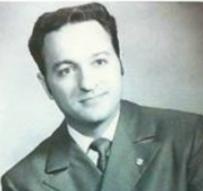
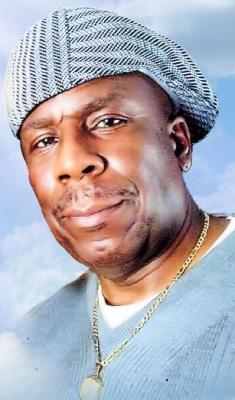
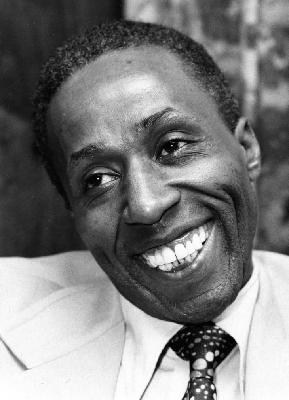
Charles Merkel, a 37-year-old man from Cherry Hill, walked into what should have been a routine workday at the Heritage Office Building on Kings Highway on June 21, 1972. The low, unassuming structure at 383 Kings Highway North, sometimes called the Heritage House or Heritage Office Building, housed the local employment agency Key Personnel, Inc., along with other offices, the kind of place people visited in hopes of finding a new start or steady work.
That early summer afternoon, though, the building became the scene of one of New Jersey's deadliest workplace shootings, and Merkel would be remembered as one of six men who never made it home.
The man who shattered the quiet of that Wednesday was later identified as Edwin James Grace, an off-duty Pinkerton security guard from Brooklyn who had become fixated on Key Personnel, Inc. Grace had turned to the agency for help finding a job in his own field, but over time, according to later accounts, he grew bitter and obsessively angry when those prospects did not materialize. On June 21, he left Brooklyn with violence already planned: he traveled to Cherry Hill carrying two sawed-off. 22-caliber firearms, described in some reports as rifles and in others as shotguns, and roughly 100 rounds of ammunition.
Shortly after 2:30 p.m., Grace walked into the Heritage Office Building wearing a guard-style uniform that made him look more like a figure of authority than a threat. Once inside the Key Personnel offices on the first floor, he separated the people there by gender, according to later reconstructions of the attack. Women were ordered to leave, sent out of the office and into the corridor and parking lot, while the men were kept inside. Then he opened fire. In a matter of minutes, he shot twelve men, moving through the office spaces and corridors, his rounds striking employees and visitors who had been working at desks or sitting across from recruiters only moments earlier. Six would die from their wounds, and six more would survive but carry the scars of that day.
Amid the chaos, Charles Merkel was among those struck down. Lists compiled from contemporary newspaper reports and later memorial efforts all record his name alongside the date and place of death: June 21, 1972, in Cherry Hill, New Jersey, one of the men fatally shot inside the Heritage Office Building. He appears in those records simply as “Charles Merkel, age 37,” with no additional public biographical details attached, but his presence among the dead places him in the same rooms and hallways as the other victims that afternoon—men like Robert Bartone, Joseph Boyd, Joseph DePalma, Theodore G. Hall, and Stephen B. Robinson, who had also come to the building expecting an ordinary day and instead found themselves at the center of a sudden, inescapable burst of violence.
Outside, the scene was one of confusion and panic. Photographs and contemporary news captions describe women office workers fleeing the building seconds after the shooting stopped, while police officers and detectives crouched behind cars and moved cautiously toward the entrance. A Courier-Post caption from the following day notes that a detective captain stood in front of the Heritage Building, warning reporters and bystanders to stay back as authorities maneuvered to reach the gunman who had killed six and wounded six more. Inside, after his rampage, Grace descended to the basement area of the building and turned one of his weapons on himself, firing a round into his own head. That final act effectively ended the standoff just as officers were closing in.
The question of arrests and suspects in Merkel's death was settled almost immediately by the circumstances of the shooting. Law enforcement and subsequent investigations identified Grace as the lone assailant: a disgruntled former client of Key Personnel whose grievances had escalated into mass murder. Neighbors would later describe him, in UPI accounts repeated in memorials to the victims, as a quiet churchgoer, a characterization that contrasted sharply with the brutality of his actions in Cherry Hill. After shooting himself, Grace was taken from the building under police control to Cherry Hill Medical Center, where he survived for a little over two weeks before dying of his self-inflicted head wound on July 8, 1972. Because the only identified suspect in the attack died of his injuries, there were no criminal prosecutions and no further arrests tied to the shooting.
In the years since, the Heritage Office Building shooting has been remembered in brief newspaper retrospectives, mass-shooting memorial sites, and true-crime summaries as an early example of a workplace mass shooting that devastated a suburban community. Within those accounts, Charles Merkel's name appears as one line in the roll call of the dead—a man in his thirties, from Cherry Hill, who happened to be in the wrong building at the wrong moment when a single armed attacker turned a place of work into a killing ground. No second shooter has ever been suggested in credible reporting, no conspiracy has emerged from official records, and the story of the case returns again and again to the same conclusion: that Merkel's death, like the deaths of the five other men killed that day, was the result of one man's rage and the terrible choices he made on a June afternoon in 1972.