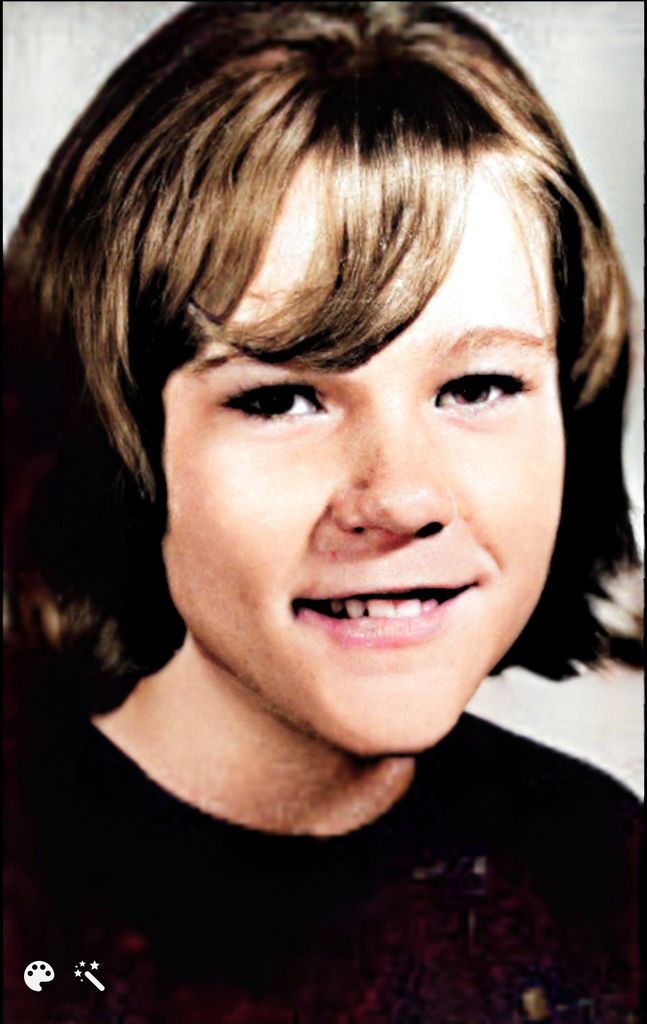
In the early morning hours of Sunday, April 20, 1980, the life of 17-year-old Shirley Small was tragically cut short in Ann Arbor, Michigan. A white female and a senior at Pioneer High School, Small was found stabbed to death on a lawn at 2820 Page Street, just a short distance from her own home in the Georgetown Townhouses. She had sustained a fatal stab wound to her chest and several cuts to her face.
Investigators found her fully clothed with her purse nearby, and there were no initial indications of sexual assault.
On the night of her death, Small had been out with friends, first roller skating in Farmington and later heading to a Big Boy restaurant in Ypsilanti. Reportedly upset after a recent breakup with her boyfriend, she did not go into the restaurant and instead began the walk home to Ann Arbor. Her ex-boyfriend, concerned for her safety, later saw her walking along Packard Road around 3:45 a.m. and offered her a ride, which she refused. Approximately an hour later, she was fatally attacked just feet from the safety of her apartment. The initial investigation into Small's murder left detectives without a clear motive or any significant evidence.
The case began to gain momentum as two other young women were murdered in Ann Arbor under strikingly similar circumstances. Glenda Richmond, 23, was found stabbed to death outside her townhouse on July 13, 1980, and Rebecca Huff, a 30-year-old graduate student, was killed in front of her apartment building on September 14, 1980. All three women were attractive, killed in the early hours of a Sunday morning near their homes in large apartment complexes, and had been stabbed in the chest. These similarities led investigators to believe they were searching for a serial killer, whom the local press dubbed the 'Sunday Morning Slasher.'
The investigation eventually led authorities to a suspect named Coral Eugene Watts. A tip from a Detroit police officer who had previously investigated Watts in connection with another murder in Kalamazoo proved crucial. Although he was questioned, a lack of evidence initially prevented his arrest. Watts later moved to Texas, where he was eventually arrested for breaking and entering with the intent to commit murder. While in custody in Texas, Watts confessed to the murders of 11 women in exchange for a plea deal, and he also admitted his involvement in the Ann Arbor slayings, including that of Shirley Small. Despite his confessions, legal technicalities in Texas eventually made him eligible for parole. This prompted Michigan authorities to pursue charges against him. Ultimately, Watts was convicted in Michigan for other murders and sentenced to life in prison. He died of prostate cancer in 2007 while incarcerated.