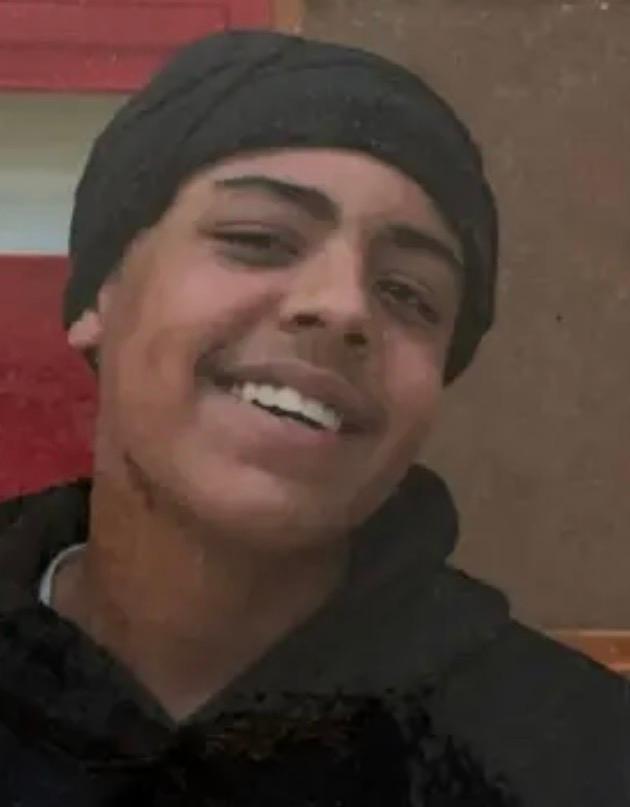
Kenneth Bush, a 33-year-old White man, was killed on March 20, 1987, during a violent home invasion on the north side of La Crosse, Wisconsin. What initially confronted investigators was not a single killing but a triple homicide. Kenneth was found shot inside the residence along with his girlfriend, Debra Reget, and his mother, Lila Bush. The three victims had been attacked in separate rooms after an intruder entered the house through a basement window and forced his way through a locked door
leading upstairs.
Investigators determined that the intruder had apparently chosen the home for a burglary rather than because of any known connection to the family. According to the later confession of Michael Tenneson, he entered carrying a Raven. 25-caliber semiautomatic pistol and began moving through the house. Kenneth encountered the intruder and confronted him. Tenneson later told detectives that Kenneth came toward him demanding to know what he was doing in the house, and Tenneson responded by shooting him. Tenneson then encountered Lila Bush, who was also shot after being beaten, and eventually found Debra Reget hiding in another part of the residence and shot her multiple times. Approximately $1,500 was taken, and the killer fled in a vehicle belonging to the victims.
La Crosse detectives Mike Abraham and Joe Dunham began piecing together the intruder's movements from evidence left behind. A clear footwear impression was discovered on the kitchen linoleum and preserved as evidence, while. 25-caliber bullets recovered during the autopsies provided investigators with the caliber of the murder weapon. The manner of entry also attracted their attention: the killer had climbed through a basement window. A neighborhood canvass eventually brought detectives to the Willow Inn, where the owner remembered a suspicious individual who had gone into the bathroom to clean himself up. That individual was identified as Michael Tenneson.
Tenneson quickly became more than simply a person investigators wanted to question. Police learned that he had recently walked away from a La Crosse County Jail work-release program and already had a history that included a burglary in nearby Holmen in which entry had also been made through a basement window. Interviews with people who knew him produced additional evidence: detectives learned that he had recently purchased tennis shoes whose tread pattern matched the impression recovered from the Bush residence, and witnesses reported seeing him with a Raven. 25-caliber pistol. Kenneth's stolen vehicle was eventually recovered near Madison. When investigators canvassed businesses in that area, a bartender remembered Tenneson asking where the closest bus station was. Police subsequently confirmed that he had boarded a bus headed west.
For several weeks Tenneson remained beyond the reach of La Crosse investigators. The break came after his mother, who had agreed to contact detectives if she heard from him, reported that he had called from the Denver Jail. He was not initially found in Denver records under his real name because he was using the name Michael Leith. Denver authorities had taken him into custody after he was caught with a vehicle associated with another violent crime. Its owners, Jeffrey Sheffield and Mitchell Gonzales, had been found shot to death. Tenneson had killed the two men in Colorado and taken property from them before being captured in the Aurora area.
Abraham and Dunham traveled to Colorado and interviewed Tenneson on May 25, 1987. After waiving his rights, he confessed to the La Crosse killings. Tenneson told detectives that he had not gone to the Bush residence intending to kill anyone; according to his account, he had selected the home at random to burglarize it. He described entering through the basement, forcing his way upstairs and shooting Kenneth after being confronted. He also admitted killing Lila Bush and Debra Reget, taking money from the residence, cleaning himself up and escaping in the stolen car. He drove toward Madison and continued his flight by bus, ultimately reaching Colorado. During the same interrogation, Tenneson also admitted responsibility for the two Denver killings.
The case against Tenneson therefore developed from a combination of physical evidence, witness interviews, his distinctive burglary method, his possession of a weapon matching the caliber used in the killings, his flight from Wisconsin and, ultimately, his own confession. He was already in Colorado custody when the La Crosse murders were formally connected to him, so there was no separate Wisconsin manhunt arrest following the confession. Instead, the Wisconsin prosecution proceeded after the Colorado murder case had been addressed.
In March 1988, a Denver jury convicted Tenneson of two murder counts for the killings of Sheffield and Gonzales, as well as aggravated robbery and aggravated auto theft. Colorado prosecutors sought the death penalty, but the jury did not unanimously agree to impose it. Tenneson received two life sentences for those murders, along with additional prison terms for the robbery and vehicle-theft convictions. Contemporary accounts described his Colorado sentence as requiring approximately 104 years before parole eligibility.
Tenneson was then returned to Wisconsin to face prosecution for the deaths of Kenneth Bush, Debra Reget and Lila Bush. Rather than take the triple-homicide case to trial, he pleaded guilty to three murder counts. Other charges, reported to have included armed burglary, firearm possession by a convicted felon and a repeat-offender allegation, were dismissed as part of the resolution. He was sentenced to three additional life terms in Wisconsin. Those sentences were ordered to follow the lengthy Colorado punishment, leaving Tenneson imprisoned for the killings and bringing the criminal prosecution for Kenneth Bush's death to a conclusion.