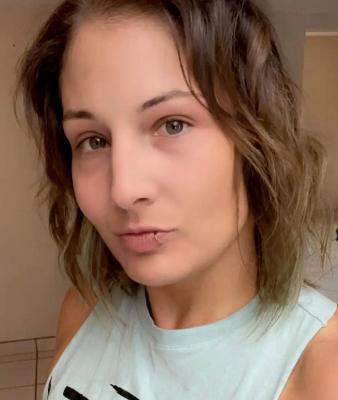
In the autumn of 1973, in the desert outskirts of Phoenix, Arizona, 21-year-old woman Yafah Hacohen—known in contemporary records as Katherine Mestites—was living in a small trailer near Mesa with her boyfriend, 19-year-old Robert Robbins. Friends remembered the young couple as part of a loose circle of drifters, spiritual seekers, and working-class kids moving through the burgeoning trailer parks and massage parlors of the Valley.
She worked at a massage parlor in Phoenix, and their trailer became a gathering place where visitors came and went, sharing drinks, drugs, and long late-night conversations.
That same fall, two men—Douglas Edward Gretzler and Willie Luther Steelman—were cutting a violent path across the Southwest, drifting from Denver into Arizona and California. In Phoenix they were introduced to the couple through mutual acquaintances, including Kenneth Unrein and Michael Adshade, young men who helped them locate Robbins and Yafah's trailer in a park outside the city. Gretzler and Steelman spent time there as guests, socializing with the couple before kidnapping Unrein and Adshade, driving them into rural California, and murdering them. The disappearances of Unrein and Adshade hung unspoken over the group, and in the killers' minds, Robbins and Yafah became dangerous: friends who knew too much and might eventually connect them to the missing men.
The mood around the trailer grew darker as the days passed. Gretzler and Steelman picked up an 18-year-old hitchhiker, Steven Allan Loughran, on their way back toward Phoenix and brought him into the orbit of the trailer community. For a short time the five of them—Robbins, Yafah, the two drifters, and Loughran—shared cramped space, drugs, and talk; but tension simmered beneath the surface. After an argument with Loughran, the killers lured him out toward the Superstition Mountains under the pretense of a drive, forced him into a sleeping bag in a remote gully, and shot him in the head. They returned to the trailer as if nothing had happened, and neither Robbins nor Yafah pressed them about where the young hitchhiker had gone.
By late October 1973, the two men had decided that their former hosts were now liabilities. While Yafah was at work in Phoenix on October 25, they put their plan into action. Robbins was attacked inside the trailer, strangled from behind with an electrical cord and then shot once in the head; his body was hidden in the bedroom, concealed beneath a mattress so that the home would look undisturbed when she returned. Later that day, Steelman drove to collect her from the massage parlor, telling her that Robbins had been taken “out of town for a few days.” Back at the trailer that evening, as she knelt at a small altar she had created for séances and spiritual rituals, she was shot from behind in the head and left dead inside the home that had once been her refuge.
For several days the trailer sat quiet in the heat, its windows dark, until friends and neighbors realized they had not seen the couple. On October 28, law enforcement entered the trailer and found the bodies of Robbins and the young woman known in news reports as Katherine Mestites. The scene made clear that they had been killed days earlier. Investigators canvassed the trailer park and surrounding area, learning from neighbors that two men known only as “Bill and Doug” had been staying there, along with a young woman from Denver named Marsha. One witness described “Bill” as a Californian, “Doug” as having a noticeable New York accent, and recounted that they had talked of heading to San Francisco. When police identified “Marsha” as Marsha Renslow and confronted her with photographs of the decomposing bodies, she finally cooperated, giving them the names and descriptions that would point directly to Willie Luther Steelman and Douglas Edward Gretzler.
As the investigation widened, Arizona authorities obtained murder warrants naming Gretzler and Steelman in the deaths of Robbins and the young woman found with him in their Mesa-area trailer. At nearly the same time, detectives in California were uncovering the rest of the pair's trail: kidnappings, robberies, and then the mass murder of the Parkin family near Lodi. On November 8, 1973, California police arrested the two men as suspects in the Parkin homicides. The warrant linking them to the Arizona trailer murders helped solidify the picture of a single, relentless crime spree stretching from Phoenix to the Sierra foothills, with Robbins and Yafah counted among at least seventeen dead.
Prosecutors in California and Arizona focused on the cases that would most swiftly and securely remove the killers from society. In California, Gretzler pleaded guilty to nine counts of first-degree murder for the Orchard Road killings and received life sentences, while Steelman was also sentenced to life for nine murders and multiple robberies. Soon afterward, both men were extradited to Arizona and tried separately for the murders of Michael and Patricia Sandberg in Tucson, as well as related kidnapping, robbery, and burglary charges. Juries in Arizona returned convictions for first-degree murder and other felonies, and both Gretzler and Steelman received death sentences. Over the years that followed, appellate courts repeatedly described the full sequence of killings—including the murders of Robbins and Yafah at the Phoenix-area trailer—as part of the aggravating background of their crimes. Gretzler was eventually executed by lethal injection in 1998, while Steelman died from illness in prison in 1986, leaving no doubt about who had taken Yafah Hacohen's life, even though her own murder was never the centerpiece of a separate, highly publicized trial.