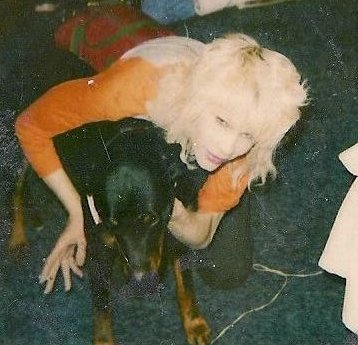
Barbara Jacobs was a 31-year-old White woman from New York City who disappeared into the warm, unsettled hours of July 13, 1991, in a city where people can brush past one another and never be seen again. That night, she crossed paths with Joel Rifkin, a Long Island man who drove the streets looking for women to take home, and Jacobs got into his car in Manhattan believing the ride would end the way so many brief transactions did—quick, forgettable, and over.
Instead, Rifkin brought her to his home in East Meadow. After she fell asleep, he attacked her with a table leg and then strangled her, turning a quiet room into a place of sudden, irreversible violence. When it was done, he wrapped her body in plastic, forced it into a cardboard box, and carried it out to be disposed of like something he could simply erase.
Jacobs resurfaced the next day, July 14, when her body was found in the Hudson River—sealed in plastic and boxed, waterlogged and decomposing. Reports describe the grim concealment and the way she had been left to drift in the river’s currents, anonymous and unattended. In the confusion surrounding her recovery, her death was initially attributed to a drug overdose, and she was buried in Potter’s Field without being identified, her name missing from the story of her own end.
Two years later, a seemingly small traffic stop cracked open the larger pattern. On June 28, 1993, police pulled Rifkin over for a missing license plate, and the encounter escalated until officers discovered a decomposing body in his vehicle—evidence that led to his arrest and the unraveling of what he had been doing across New York for years. As investigators pressed in, Rifkin confessed to multiple killings, and Jacobs—once a nameless entry, once misjudged and buried among strangers—was identified as one of his victims.
The case that had begun as a body in the river ultimately became part of a broader prosecution that put Rifkin away for life. He was convicted on nine counts of second-degree murder and sentenced to 203 years to life in prison, with Jacobs listed among the confirmed victims whose deaths were tied to him after his arrest and confessions. Whatever had been unclear in the first hours after she was found, the later record fixed the responsibility to a single man—one who would spend the rest of his life behind bars while the city moved on above the same dark water where she was left.