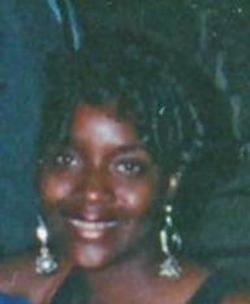
Bobbie Ann Landini, 27, a White woman, was living in Birmingham, Alabama, when a stranger’s attention fixed on her name in the most ordinary way—seen on a mailbox marked “Miss.” On July 11, 1961, that small detail became the start of a violent encounter in her second-floor apartment, where she was attacked and killed, the scene later pointing investigators toward a predator who moved from place to place and chose targets with chilling opportunism.
The man later tied to her death was Hugh Bion Morse, a drifter with a widening trail of sexual violence across multiple states. Accounts of his movements describe him arriving in Birmingham by bus and prowling with time to spare before leaving again, a pattern consistent with a predator searching for easy access and anonymity in unfamiliar neighborhoods. In the version of events reported after his capture, Landini was raped and beaten to death with a pipe, and she was also sexually assaulted after she had been killed—details that placed her murder within a broader series of crimes marked by domination, burglary-like entry, and escalating brutality.
For a time, the case in Birmingham remained a grim local mystery, but it was soon pulled into a national manhunt. By late summer 1961, Morse had been added to the FBI’s Ten Most Wanted list, and the search for him crossed state lines. The breakthrough came not from a hidden informant network but from recognition: a visitor touring FBI Headquarters in Washington, D.C., saw his photograph on display and connected it to a man living under another name in St. Paul, Minnesota—an observation that rapidly led agents to his doorstep.
Morse was arrested in St. Paul on October 13, 1961. Contemporary reporting described him as a “most wanted” sex criminal captured near the scene of a Minnesota homicide, taken without resistance after investigators closed in. In the aftermath, he spoke and boasted in custody about multiple killings, and authorities connected him to a cross-country sequence of attacks and murders—Landini’s death in Birmingham included among them—turning her case from a single-city tragedy into one chapter of a roaming spree.
As the criminal proceedings unfolded, Morse was prosecuted in Minnesota for the killing of Carol Ronan and received a life sentence for second-degree murder. Years later, he was extradited to Washington in connection with earlier crimes there and entered guilty pleas tied to additional victims, a legal arc that underscored how widely his violence had spread before he was finally stopped. He remained imprisoned for decades and died in a Minnesota correctional facility in April 2003—meaning that, for Landini’s loved ones, the “suspect” in her case was not a shadowy unknown but a identified serial killer whose freedom had ended only after he left a trail of victims behind him.