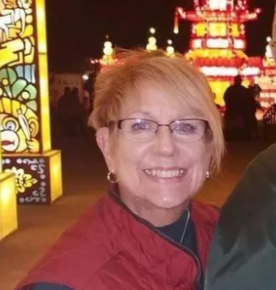
Tatiana Casap, a 35-year-old White/Caucasian woman, was found dead inside her family’s home on Cider Hills Drive in the Village of Waukesha, Wisconsin, on February 28, 2025. Although her body was discovered that day, investigators later concluded that she had actually been killed on February 11, approximately 17 days before deputies entered the residence. Her husband, Donald Mayer, was also found dead elsewhere inside the home. Investigators determined that both had suffered gunshot wounds.
The investigation began when Mayer’s mother, who lived in Massachusetts, became concerned after losing contact with the family and requested a welfare check. There were other warning signs as well. Mayer had stopped reporting to work, and Nikita Casap, Tatiana’s 17-year-old son, had stopped attending Waukesha West High School. Mayer’s employer had continued receiving text messages from his phone claiming that he was sick, but investigators later alleged that Nikita was responsible for communications intended to make it appear Mayer was still alive. Neighbors also noticed unusually little activity at the residence.
When deputies eventually entered the house, Tatiana was discovered covered with blankets and clothing. Court records described what appeared to be a gunshot exit wound near her right shoulder, and decomposition indicated that she had been dead for a considerable period of time. Mayer was subsequently located in a first-floor office, also concealed beneath blankets, with an apparent gunshot wound to the back of his head. Investigators found documentation showing Mayer had purchased a Smith & Wesson. 357 Magnum revolver, but the gun was missing from the residence.
Evidence increasingly focused investigators on Nikita Casap. According to the criminal complaint, a classmate told detectives that Casap had talked about killing his parents in the weeks before the homicides. Investigators also obtained home-surveillance evidence indicating that after the killings Casap continued living in the residence while the bodies remained concealed. Prosecutors said surveillance footage showed him entering the room where Mayer’s body had been covered with blankets and pillows and tending candles nearby. Investigators ultimately placed the killings on February 11, with Tatiana believed to have been shot later that evening.
For nearly two weeks afterward, Casap remained in the Waukesha area. Investigators tracked activity associated with him at restaurants, stores and other locations while his mother and stepfather remained dead inside the house. On February 23, a neighbor saw Mayer’s Volkswagen Atlas being driven away from the property with Casap apparently behind the wheel. Phone and surveillance data subsequently traced his trip through several states, including Illinois, Iowa, Nebraska, Wyoming and Colorado.
Late on February 28, only hours after the bodies were discovered, police in WaKeeney, Kansas, stopped Mayer’s Volkswagen Atlas near Interstate 70. Casap was driving and the family dog was with him. Officers saw the missing. 357 Magnum revolver on the passenger-side floorboard. Investigators also recovered ammunition, spent shell casings, the victims’ identification, electronic devices and a substantial amount of cash and property. A later search of the vehicle found approximately $14,000 in cash, jewelry, banking documents and other items taken from the Waukesha residence. Casap was arrested following the traffic stop and initially faced charges connected with the stolen vehicle and property.
As detectives examined Casap’s electronic devices and communications, the investigation expanded well beyond theft. Authorities said his phone contained extremist material and communications concerning plans to acquire a drone and explosives. Federal investigators alleged that Casap intended to use money obtained from his family to help finance a plan to assassinate President Donald Trump and destabilize the United States before fleeing overseas. These allegations formed part of the government’s description of a possible motive for the killings, although Casap was not separately federally charged with attempting to assassinate the president.
Waukesha County prosecutors formally charged Casap with two counts of first-degree intentional homicide in connection with Tatiana’s and Mayer’s deaths. Additional felony charges included two counts of hiding a corpse, theft of movable property, identity-related offenses, operating a vehicle without the owner’s consent and intimidating a witness. At a preliminary hearing in April 2025, a court commissioner found sufficient evidence for the homicide prosecution to proceed. Casap initially pleaded not guilty at his arraignment in May and remained jailed on $1 million cash bond.
The case ultimately ended without a murder trial. In January 2026, Casap changed his plea and admitted in Waukesha County Circuit Court that he killed Tatiana and Mayer. He pleaded guilty to two counts of first-degree intentional homicide. In return, prosecutors dismissed the remaining felony charges, including the corpse-hiding and theft counts, although the dismissed conduct could still be considered by the court when determining the sentence. The guilty pleas resulted in mandatory life sentences under Wisconsin law.
On March 5, 2026, Judge Ralph Ramirez sentenced Nikita Casap to life imprisonment without the possibility of parole. Casap addressed the court and acknowledged that what he had done was wrong, while his defense sought the possibility of eventual release. Prosecutors argued that the calculated nature of the killings, the concealment of the bodies, the thefts and the broader violent plans demonstrated that he should never return to the community. The judge declined to establish any future parole eligibility, leaving Casap imprisoned for life for the murders of Tatiana Casap and Donald Mayer.