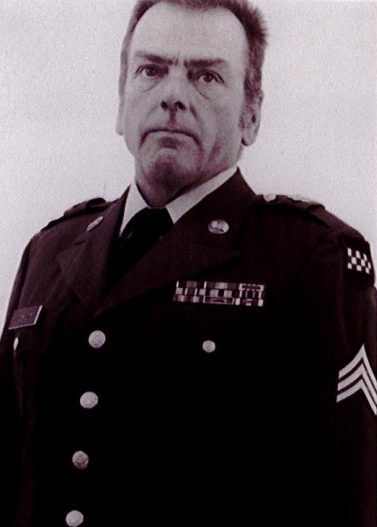
Raymond Golden, an 88-year-old White man, was a military veteran whose life ended while he was a patient at the Louis A. Johnson Veterans Affairs Medical Center in Clarksburg, West Virginia, in early June 2018. Golden had served in the United States Army from 1951 to 1953 and later in the United States Air Force from 1955 until 1973. His military career spanned the Korean War and Vietnam War eras, and he served as an aircraft loadmaster, with assignments that included Vietnam, Panama and the
Philippines. What initially could have appeared to be the death of an elderly hospitalized veteran eventually became part of a much larger investigation into a series of suspicious deaths at the Clarksburg VA facility.
Golden was under the care of the hospital during a period when nursing assistant Reta Mays worked overnight shifts on Ward 3A. Mays had access to vulnerable patients and sometimes sat with them one-on-one, but her position did not authorize her to administer medications, including insulin. Investigators ultimately determined that she was taking insulin from the hospital medication area and injecting patients without a medical reason. In Golden's case, prosecutors said his blood-glucose level fell to an extraordinarily low reading of 7 mg/dL after the insulin was administered. The resulting severe hypoglycemia was part of the pattern investigators connected to Mays and to the deaths of other veterans at the facility between 2017 and 2018.
The deaths began drawing scrutiny after a physician raised concerns in 2018 about patients suffering unexplained episodes of dangerously low blood sugar, including patients who did not have diabetes. Investigators noticed that the number of hypoglycemic events on the ward was unusual and that the affected veterans had often been medically stable or preparing for discharge or transfer. The Department of Veterans Affairs Office of Inspector General brought in the FBI, and investigators began reconstructing the patients' final hours through medical charts, staffing records, interviews and forensic evidence. Mays initially denied involvement. Authorities nevertheless found that she had been working during the relevant periods and had access to the patients at times when investigators believed the insulin was administered. Within days of the investigation beginning, she was removed from direct patient contact.
The investigation developed into a lengthy federal case. Authorities conducted more than 300 interviews, examined thousands of pages of medical records, reviewed telephone, computer and social-media records, consulted forensic specialists and endocrinologists, and exhumed some victims so additional examinations could be performed. Federal investigators said scientific and circumstantial evidence established that insulin injections caused the fatal hypoglycemic episodes. According to prosecutors, narrowing the time at which insulin had entered the patients' systems and comparing those periods with staff access repeatedly led investigators to Mays. No other person was charged as a participant in Golden's killing, and investigators have not publicly identified another suspect responsible for his death. The FBI later said investigators never established a clear motive, although one investigator believed control over particularly vulnerable patients may have played a role.
Mays was publicly identified and formally charged in July 2020 after roughly two years of investigation. A federal information charging her was unsealed on July 14, 2020, rather than the case proceeding through a grand-jury indictment, because she had agreed to resolve the prosecution through a plea. That same day she appeared before U.S. District Judge Thomas S. Kleeh in Clarksburg and pleaded guilty to seven counts of second-degree murder for the deaths of Golden, Robert Edge Sr., Robert Kozul, Archie Edgell, George Shaw, Felix McDermott and a veteran identified in the case as W.A.H. She also pleaded guilty to assault with intent to commit murder involving another veteran, Russell Posey. After entering her pleas, Mays was taken into custody and remanded to West Virginia's Northern Regional Jail. Because she admitted the crimes through the plea agreement, there was no murder trial.
The case concluded with sentencing on May 11, 2021. Judge Kleeh imposed seven consecutive life sentences on Mays, one for each second-degree murder conviction, followed by an additional 20-year sentence for the assault with intent to commit murder. She was also ordered to pay $172,624.96 in restitution to the victims' families, the VA hospital, Medicare and insurance companies. The VA Office of Inspector General separately found serious clinical and administrative failures at the Clarksburg facility that helped the killings remain undetected, including problems involving oversight and access to medication. Ultimately, the criminal investigation placed responsibility for Golden's killing on Mays alone: the former nursing assistant admitted intentionally administering insulin to patients in order to cause their deaths and received a sentence designed to keep her imprisoned for the remainder of her life.