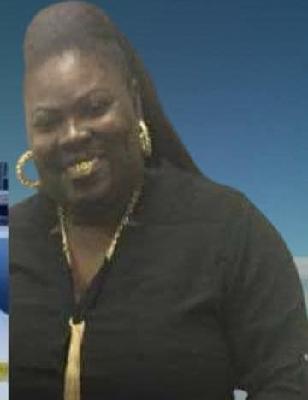
Dena Michel was 42 years old, a White/Caucasian woman, and her death on February 14, 2026 in Baton Rouge, Louisiana left a sudden silence where a living presence had been. A date that so often carries the weight of warmth, closeness, and small rituals instead became the marker of a loss that cannot be softened by any calendar page turning. In a city that keeps moving—traffic lights changing, neighborhoods waking and sleeping, families gathering and parting—her absence became its own kind of stillness, felt most sharply by the people who knew her as more than a name.
When someone dies, there is a moment that divides life into before and after. For those closest to Dena, that dividing line would have arrived without mercy, carrying the first wave of disbelief: the mind reaching for ordinary explanations, the heart refusing to accept the finality. There is a particular kind of ache when a death lands on a day already heavy with meaning, when the world outside seems to insist on celebration while a family’s world turns inward, darkened by shock and the hard edge of reality. Grief does not follow etiquette. It comes as a rush, as a numbness, as anger that has nowhere to go, as a quiet that feels too large for any room.
In the wake of a death like this, people often search for something to hold on to—an answer, a reason, a single detail that makes the story make sense. But with only the information available here, there is no publicly provided account of what happened in her final hours, no clear narrative of circumstances, no official descriptions to lean on, no visible trail of names or charges to suggest who might be responsible, if anyone is. That uncertainty can be its own kind of wound. Questions become companions. Every unanswered “why” and “how” presses against the heart, and each day can feel like learning the news all over again.
If there were an investigation, a search for the truth would matter not only because it promises accountability, but because it gives shape to the chaos that follows sudden loss. When a case has suspects, arrests, or charges, it can offer families at least a path—painful, imperfect, but visible—toward resolution. Here, no such details are provided, and so the story remains unfinished in the most difficult way, suspended between what is known and what is still missing. In that space, those who cared for Dena would be left to gather their memories like keepsakes, holding onto her voice in old messages, her presence in familiar places, and the fragments of ordinary life that become sacred when a person is gone.
Dena Michel’s death is more than a date and a location; it is the loss of a life with its own private history—relationships, routines, hopes, and hard-won moments that never make it into public summaries. Whatever her days looked like, whatever she carried quietly, whatever she gave to the people around her, the fact remains that she should have had more time. And for those who loved her, the truest measure of what was taken is not in headlines or files, but in the empty chair, the unanswered call, the way the world can look unchanged while everything inside a family has been altered forever.