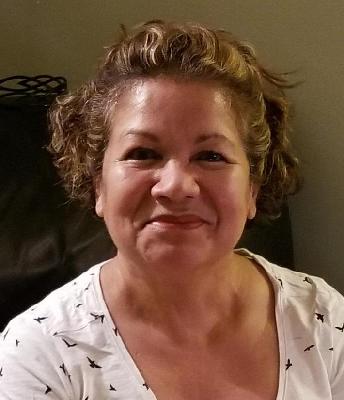
Brooklyn in the late summer of 1999 was already a city of noise and motion, but certain corners of Williamsburg and Bedford-Stuyvesant carried a different kind of hush—one that settles in when people start counting the missing and watching rooftops, vacant lots, and dim utility spaces with dread. Juanita Carmichael, 34, a Black woman from Brooklyn, is associated with that frightening moment in time, yet the surviving public accounts available today do not preserve a clear, standalone narrative of her last hours or the precise circumstances of her death in the way they do for the better-known victims tied to the investigation that followed.
What those public summaries do make vivid is the pattern investigators were trying to understand: women found strangled, left where they fell, with the killer showing little interest in hiding what he’d done. Accounts of the “Brooklyn Strangler” case describe bodies discovered in stark, exposed places—two on rooftops, another in a vacant lot in the same Williamsburg vicinity, others indoors in Bedford-Stuyvesant, and one in a utility room beneath the Williamsburg Bridge, a grim geography that suggested the murderer moved on foot through familiar terrain and struck where he believed no one would interfere. The first killing in that officially recognized series is commonly dated to August 26, 1999, marking the moment the city’s scattered tragedies began to look, to detectives, like a single thread being pulled tighter.
Police pressure mounted as the murders continued, and the investigation widened into the street-level networks around the victims. Public reporting on the case says detectives questioned and detained numerous men who were known associates of sex workers in the area, trying to separate rumor from evidence. At one point, an early suspect was taken in and later cleared by DNA testing—a reversal that underscored how fragile these cases can be when witnesses are scarce and the dead cannot speak for themselves. Yet that same cleared man, according to widely repeated accounts, remained close to investigators afterward and ultimately pointed them toward another homeless man he knew—Vincent Johnson—described as fixated on violent sexual fantasies.
Johnson, the public record says, resisted giving police a DNA sample and denied knowing the victims. Detectives then relied on a small, almost banal moment: one officer observed him spit, recovered the saliva from the street, and had it tested. The resulting match—DNA said to be consistent with evidence tied to multiple crime scenes—became the hinge the case swung on. Johnson was arrested on August 5, 2000, and later confessed to killing five women; he ultimately pleaded guilty to one count of first-degree murder and five counts of second-degree murder, receiving a sentence of life imprisonment without parole.
As for arrests or identified suspects specifically connected to Juanita Carmichael, the accessible public sources that summarize the Brooklyn Strangler investigation do not clearly place her name among the victims Johnson confessed to killing, and they do not lay out an independent set of investigative details—no publicly documented suspect list, arrest timeline, charges, trial testimony, or conviction record that can be tied to her case alone from those accounts. In the narrative that survives online, her name sits at the edge of a larger, better-documented story of Brooklyn’s late-1999 strangulation panic—close enough to the shadow of that spree to invite association, but not supported in the most widely available summaries by the same concrete, case-specific public detail that accompanied the eventual arrest and conviction of Vincent Johnson.